
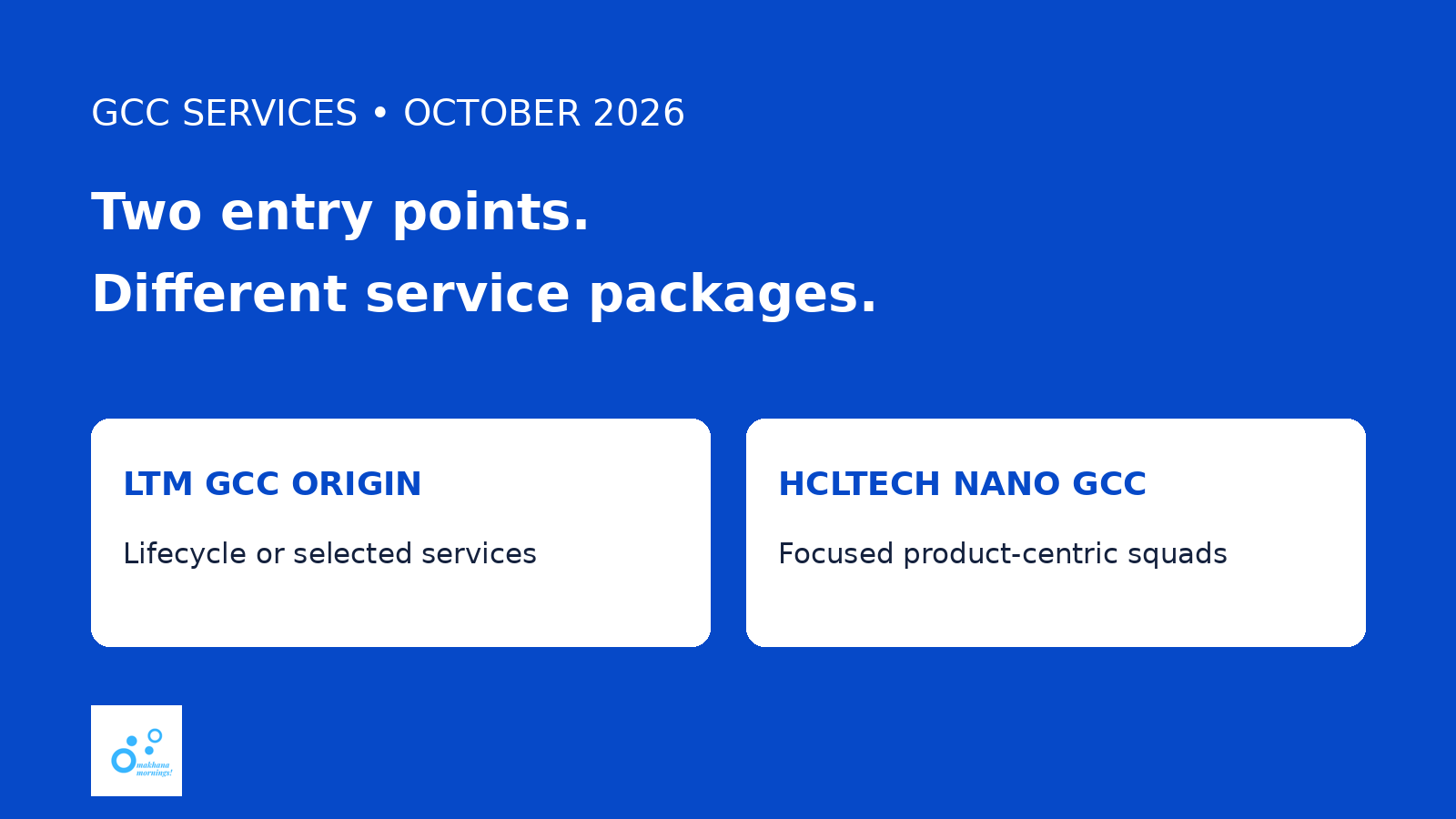
Two announcements made on 28 October show how technology-services companies are packaging the work around Global Capability Centres, or GCCs. LTM’s GCC Origin and HCLTech’s nano GCC offering share an AI theme, but describe different starting points for a customer.
This is a comparison of those dated offerings, not two new November launches or evidence that either has already delivered the performance it promises.
A lifecycle menu and a focused starting point
LTM describes GCC Origin as a standalone business unit within the company, with dedicated leadership, sales and delivery teams. Its service catalogue covers establishing, operating, expanding and transforming centres in India.
Clients can select the full lifecycle or individual services. The announced options include assisted and virtual GCCs, joint ventures and arrangements involving an eventual transfer. The scope extends from location, infrastructure and talent to operations and structured handover.
HCLTech’s AWS-based nano GCC offering centres on compact, product-focused squads and a targeted initial scope that can expand. It is pitched both at established GCCs seeking an AI-focused addition and at mid-market enterprises without an in-country presence.
HCLTech identifies Asia Pacific as the first rollout phase, delivered through its India organisation with support from Lucknow. It leads operating-model design and implementation; AWS supplies joint go-to-market support and access to AI services.
Compare the assignment, not the label
The distinction is one of packaging, not a league table. LTM describes a broad menu across a centre’s lifecycle and ownership arrangements. HCLTech emphasises a focused entry point for particular work. Neither description alone establishes which proposal would cost less or deliver better results for a given customer.
A buyer can make the comparison more useful by defining the job before comparing labels. Is the immediate need to establish an operation, improve an existing function or build a specific product? Which activities are included in the first phase, and what would trigger an expansion?
For the providers, the announcements identify services they intend to sell. They do not disclose comparable contract wins, margins or realised customer productivity from these offerings. The commercial story will become clearer through customer commitments and delivery evidence, rather than the launch names alone.


Leave your thoughts