
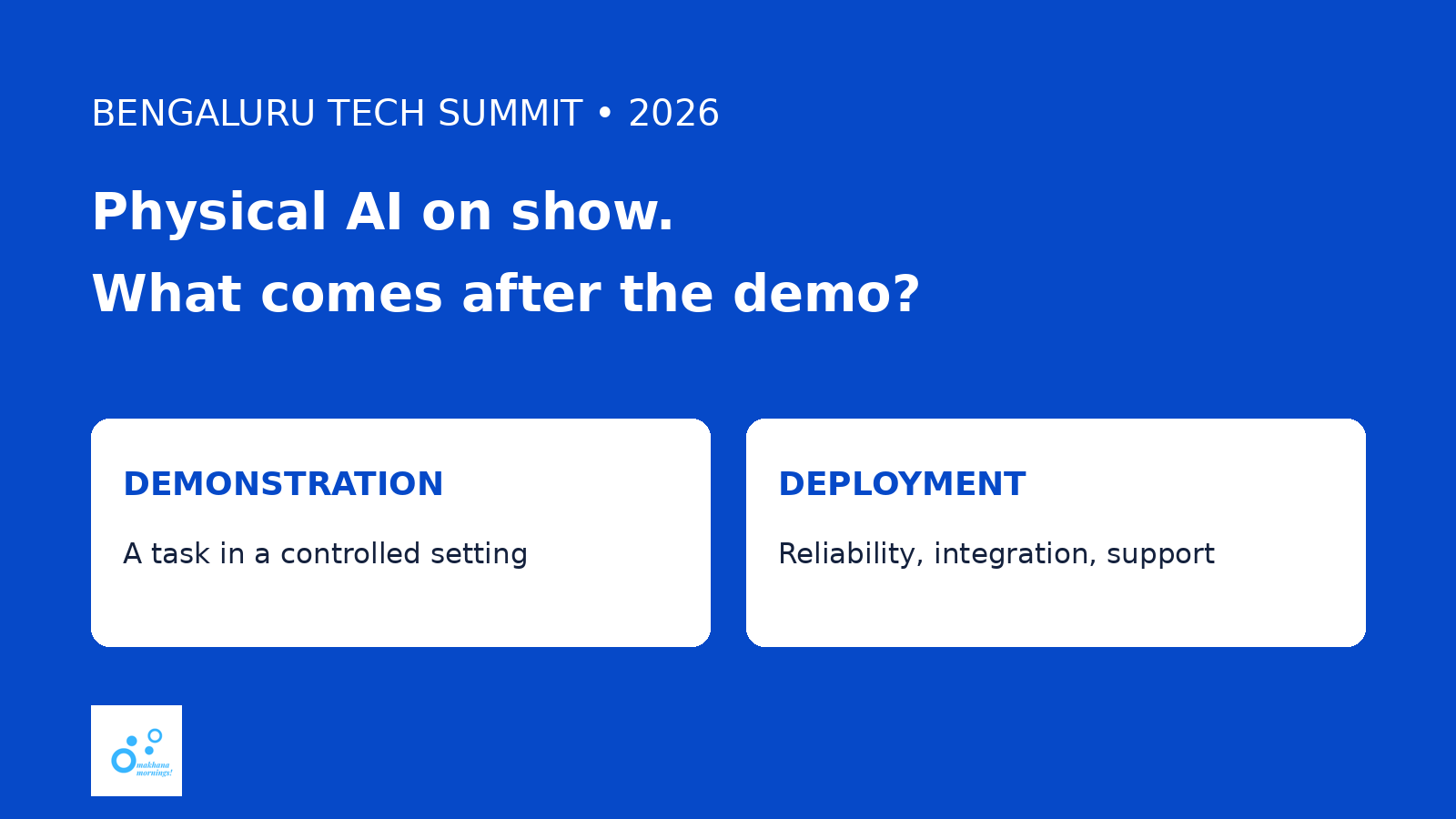
The Bengaluru Tech Summit’s AI and Robotics Pavilion gives physical AI a public stage. Its business significance lies in bringing machines, potential buyers and integrators together, rather than demonstrating that a new technology has already become dependable commercial infrastructure.
The organiser’s programme for 17–19 November at BIEC lists humanoids, drones, industrial robots and collaborative robots, autonomous mobility and aquatic robotics. It describes systems that sense, reason and act, bringing AI beyond a screen and into interaction with the physical world.
The advertised programme includes demonstrations and opportunities to meet enterprises and investors. It also says final layouts and demonstrations remain subject to confirmation. The programme is therefore evidence of the intended showcase, not a verified count of completed demonstrations, orders or deployments.
The buyer’s work starts after the demonstration
For a prospective buyer, a demonstration is a useful starting point. It can reveal whether a machine performs a relevant task and help frame a more specific trial. But a short, prepared demonstration cannot answer every question about repeated operation on a customer’s site.
The practical questions begin with the task. What must the machine handle, how often, and under what conditions? What happens when an object, route or environment differs from the example? Who intervenes when the system cannot complete the job?
Integration is another part of the purchase. A robot may need to fit existing equipment, software, workflows and maintenance arrangements. The economics depend on that surrounding work as well as the machine itself.
The most useful follow-through from a pavilion is therefore a clearly defined evaluation: the customer’s task, a representative operating environment, measurable acceptance criteria and responsibility for support. Those are business questions to ask of exhibitors, not claims that any particular showcase has failed them.
Bengaluru’s event creates an opportunity to have those conversations. Whether that opportunity becomes sustained use will be visible later in trials, customer decisions and reliable operation, not simply in the number of machines on display.


Leave your thoughts