
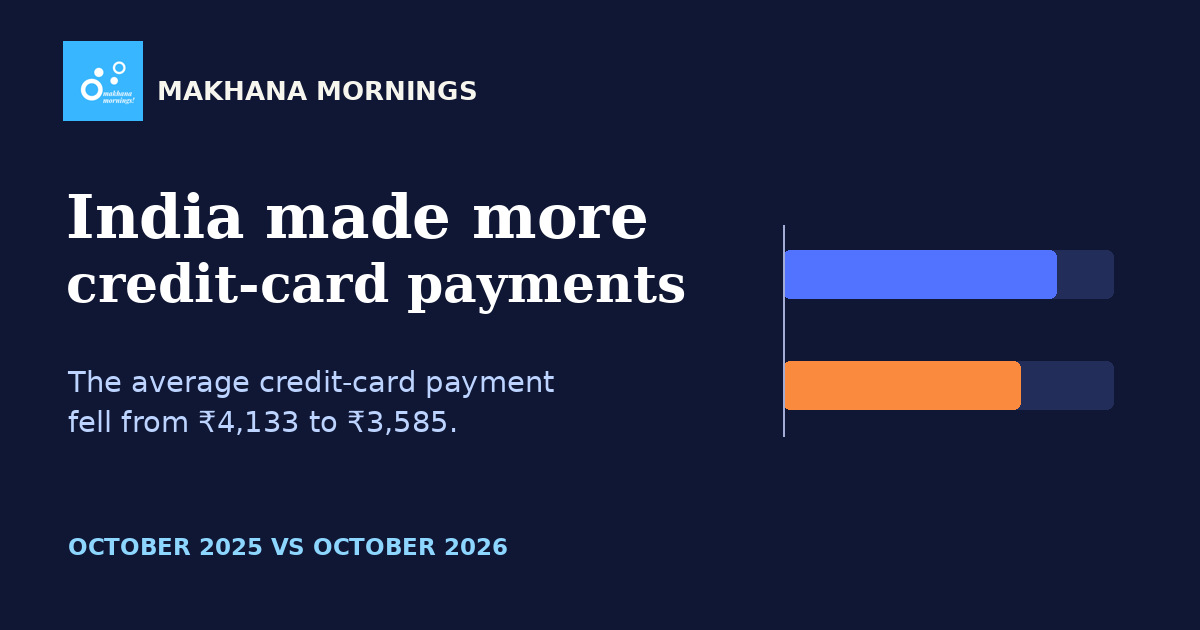
Credit-card payments in India rose to nearly ₹2.45 lakh crore in October, but the average payment was smaller than a year earlier. The two things happened together because the number of payments rose much faster than their total value.
The Reserve Bank of India’s provisional figures show about 68.33 crore credit-card payments in October 2026, up 31.8% from October 2025. Their total value rose 14.4%, from ₹2.14 lakh crore to ₹2.45 lakh crore. Divide each month’s total value by its payment count and the average falls 13.3%, from ₹4,133 to ₹3,585.

Explore the credit-card payment comparison in One Chart.
The average fell both at the till and outside it
At point-of-sale terminals, the average payment fell from about ₹3,386 to ₹2,778. In the RBI’s other credit-card payments category, it fell from about ₹4,891 to ₹4,321. The decline therefore shows up in both categories, not just in the mix between them.
The other category, which the RBI labels “Others,” also accounted for about 93% of the year-on-year rise in total payment value. The point-of-sale category added about ₹2,205 crore; the other category added about ₹28,553 crore. The RBI table does not break that category down by product or merchant, so it cannot tell us what people bought.
The number of cards is not the number of shoppers
The number of credit cards outstanding rose from about 11.41 crore to 12.67 crore over the year. One person can have more than one card, and a card may not have been used in the month. The data show more payments across the system, not that every shopper used a card more often.
The average was also higher in October than in September 2026, when it was about ₹3,343. October can therefore look stronger than the preceding month and still have a smaller average payment than last October. Festival timing and card use can shift from month to month, and the table does not separate their effects.
The Crunch
Payment count, payment value and the amount people owe on cards are different measures. The October figures show a rise in the first two and a fall in the average payment year on year. They do not establish a rise in unpaid card balances or a change in overall household spending.




Leave your thoughts