
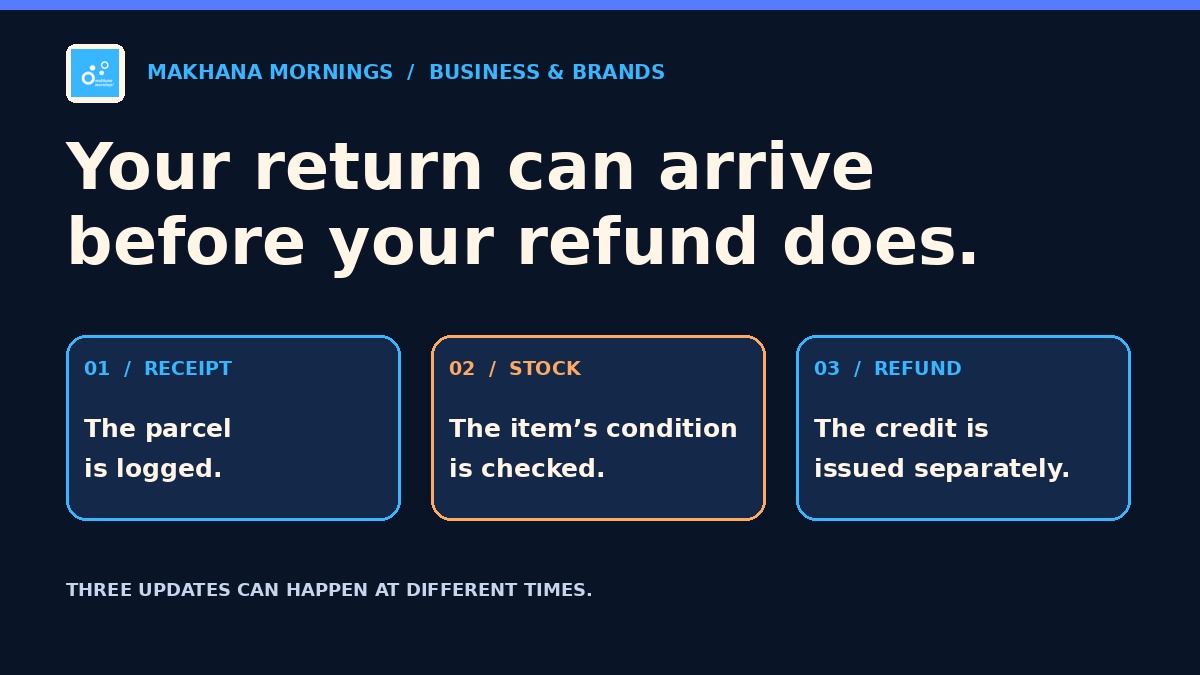
You order two shirts and send one back. The retailer emails to say it has received the return, but the refund still isn’t on your card. To you it’s one return. To the retailer it’s three questions: Did the right item arrive? Can it be sold again? Has the right amount been credited? The email confirms the parcel arrived. It does not answer the other questions.
A warehouse scan does not settle the refund
Take the shirt in that parcel. The warehouse can record the parcel’s arrival before anyone checks the shirt against the original order. The stock system needs a separate decision about its condition. An undamaged shirt might go back on sale; one that needs repair stays out of the sellable count. The finance system needs to match any credit to the returned shirt, not reverse the whole two-shirt order.
These records describe different things. Fynd Commerce, for example, documents separate steps for receipt, inspection, stock reclassification and issuance of a credit note. A credit note adjusts the original invoice. It is not evidence that money has already appeared on a card. That is an illustration of how a retail system can work, not a claim about the systems in any particular warehouse.
The shopper can see the gaps between those steps
UK clothing retailer Ambrose Wilson says it emails customers when a return arrives. It allows up to 14 days to process the return and asks card customers to allow another five working days for the credit. Its guidance also covers parcels where customers have been credited for some items but not others. For a qualifying purchase on its personal credit account, the retailer may instead adjust the statement and refund amounts already paid, under the account terms. Those timings and terms are specific to Ambrose Wilson.
Why a British retailer hired an Indian software company
On 25 November, Mumbai-based Fynd announced that N Brown had chosen its Boltic software to connect systems that handle orders, dispatches, returns and stock. Ambrose Wilson is the planned first deployment before a wider rollout. Connecting the records can let a team see where a return is stuck without treating “parcel arrived” as “refund paid”. The announcement did not establish that the rollout was complete or that refunds were getting faster.
The telling measure is how long it takes an item to go from receipt to an issued refund, and how often a returned item needs someone to match it to the right order. A retailer can make the warehouse scan faster without fixing a backlog in finance. That is why the status of the item matters more than the status of the parcel.


Leave your thoughts