
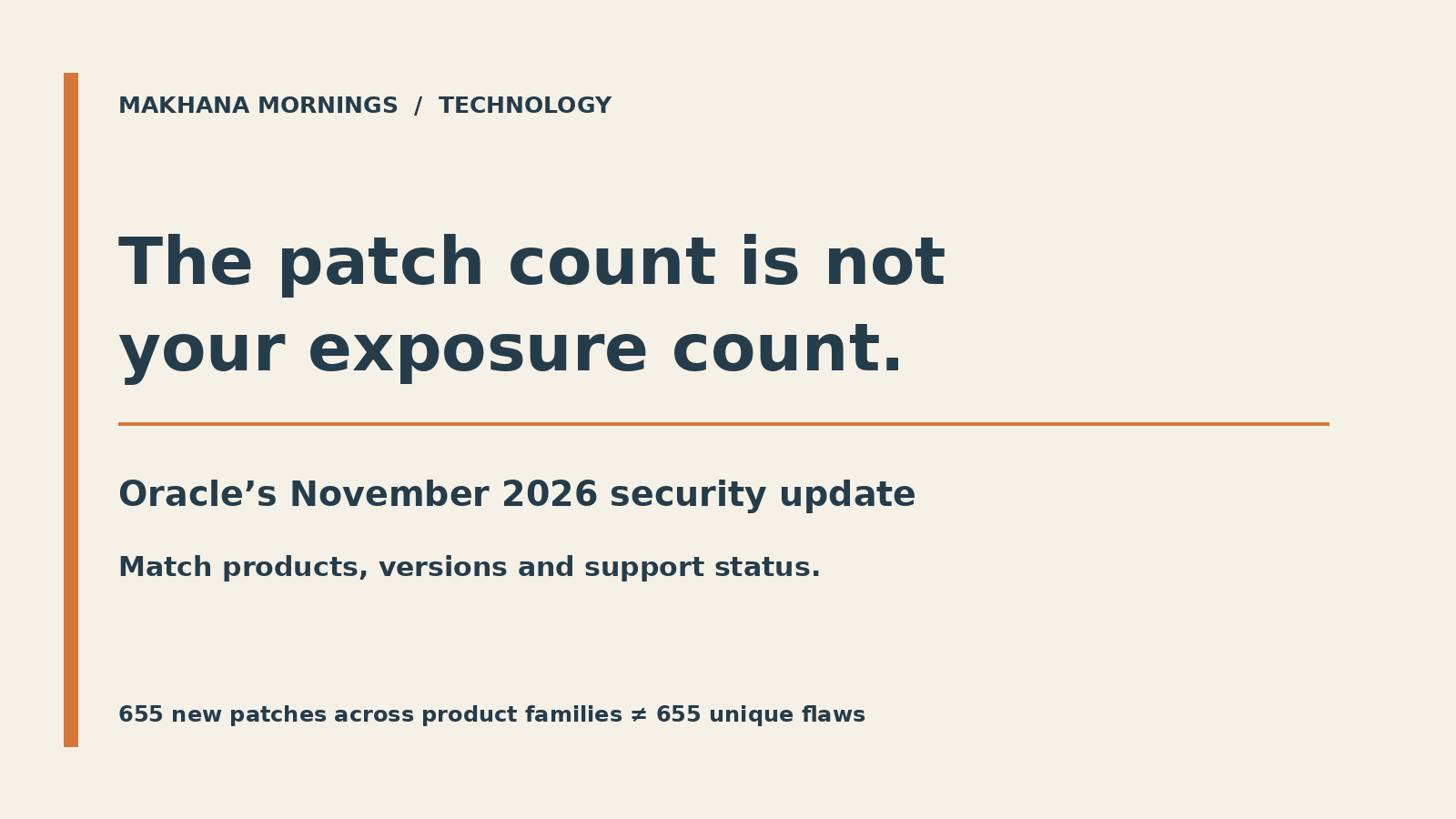
Oracle released its November Critical Security Patch Update on November 17, listing 655 new security patches across product families. For businesses running Oracle software, the useful question is not how large that headline number looks, but which deployed products and versions match the advisory.
A patch count is not an exposure count
The official advisory explains that the focused update complements quarterly cumulative Critical Patch Updates. A vulnerability can appear in several product matrices under the same CVE identifier, so 655 patches should not be described as 655 unique flaws or as problems affecting every installation.
For example, the APEX matrix lists two vulnerabilities rated 9.8 under CVSS 3.1 that may be remotely exploited without authentication. It names versions 24.1.22, 24.2.21, 26.1.5 and 26.2.0. Those version limits matter; a severity score is not evidence that a particular business has been compromised.
Inventory first, then product-specific instructions
Oracle recommends applying the relevant patches promptly and reviewing earlier advisories for missed updates. Its programme covers versions under Premier or Extended Support; older unsupported releases are not tested for these vulnerabilities and should not be assumed safe.
A separate November 18 E-Business Suite update directs administrators to supporting patch documentation, including the latest release-specific availability information. It stresses reviewing that documentation before applying patches.
The management task is to close the loop
For India-based IT teams and shared-service operators, a practical response is to assign an owner to each affected deployment, record the installed version and support status, and reconcile the vendor instructions with application testing and change controls. This is an operational implication, not an estimate of Indian organisations affected.
A patch ticket being opened is different from an update being installed and verified. Management needs evidence of completion and a clear account of unresolved dependencies, not simply a reassuring total of tickets raised.
This release is separate from the Oracle JDK 21 licensing change covered earlier. Product entitlement, patch applicability and successful deployment remain distinct checks.



Leave your thoughts