
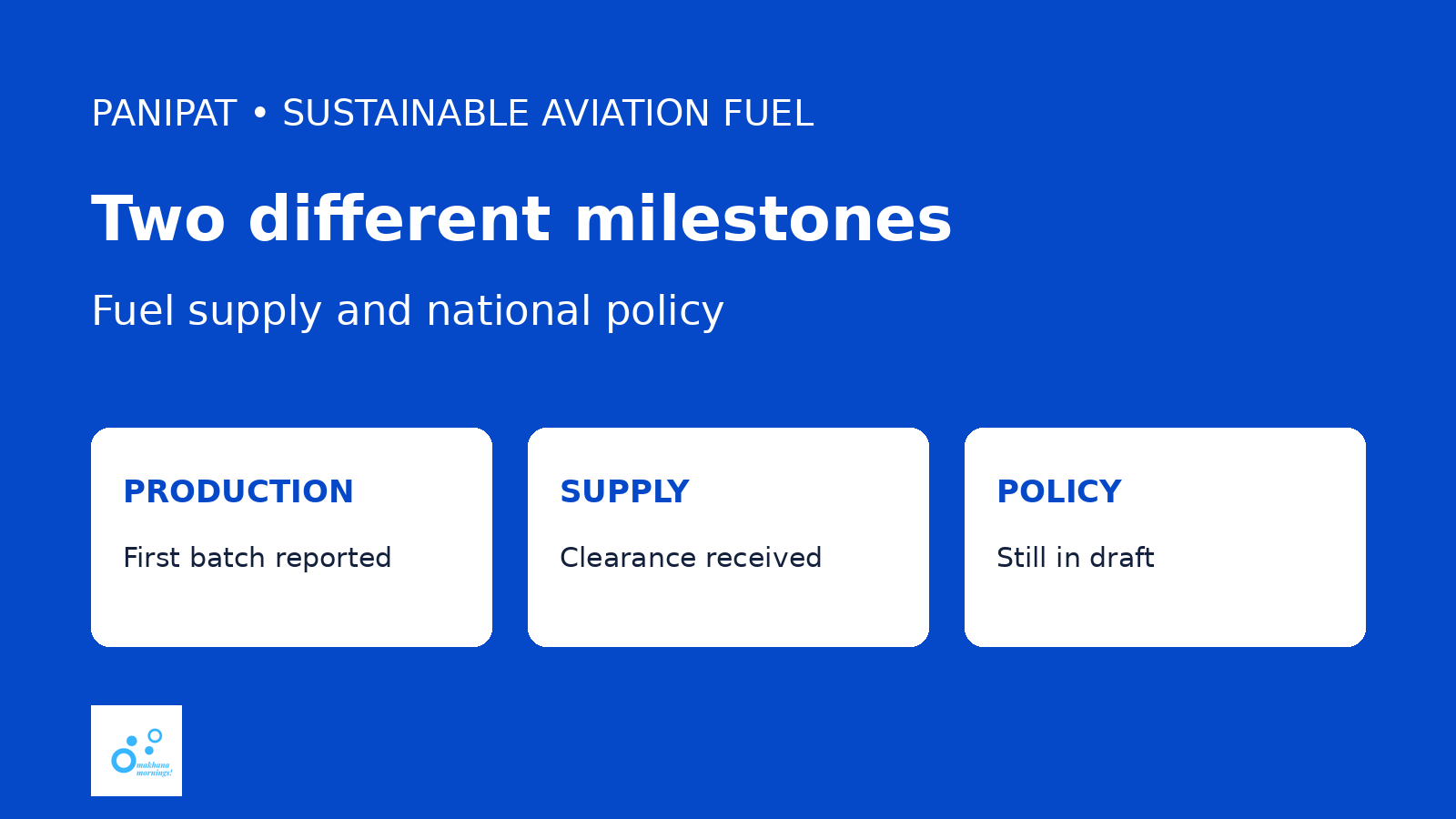
Indian Oil’s Panipat refinery has reached a commercial-supply milestone for sustainable aviation fuel, while the national policy intended to support that market remains in draft.
At FICCI’s Sustainable Aviation Fuel Summit on 17 November, Indian Oil chairman A S Sahney said the refinery had produced a first batch through co-processing and had received clearance for commercial supply, according to the organiser’s account.
That is progress on the supply side. It is not evidence, on its own, of how much fuel airlines have bought or received.
At the same event, civil aviation minister Ram Mohan Naidu Kinjarapu said the draft National Sustainable Aviation Fuel Policy had been sent to the petroleum ministry for comments. Its proposed measures include an advisory council, public-private partnerships supporting production and feedstock collection, and a DGCA registry to track and verify SAF transactions.
These are proposals, not mechanisms that the summit announcement establishes as already operating.
For businesses, the two developments answer different questions. A refinery’s clearance concerns the route to supplying fuel. A policy framework concerns the conditions under which producers invest, buyers commit and transactions are recorded.
The next useful evidence will therefore be commercial: supply agreements, delivery volumes and prices. Those details would help distinguish production capability from a market that customers are using.
The Panipat development also sits separately from Air India and Airbus’s corporate SAF feasibility study. That study examines a potential customer programme; it should not be treated as a purchase commitment for this refinery.
India’s SAF story is moving on both supply and market design. Keeping those stages separate makes it easier to see what has changed, and what still needs to happen.


Leave your thoughts