

A brand for two sides of the same job
A furniture buyer can see the shape, finish and colour. The adhesive is harder to inspect. Yet someone must choose it before the furniture reaches the home. That creates two different conversations: one with the household paying for the finished piece, another with the carpenter making it.
Fevicol's history is revealing because Pidilite worked on both conversations. It did not simply advertise a workshop product to a larger audience. Its decisions connected practical familiarity among woodworkers with a public identity built around strong bonds. Read together, those decisions explain the strategy better than any single famous commercial.
In pictures
Swipe or scroll through the visual summary. The full explanation continues below.
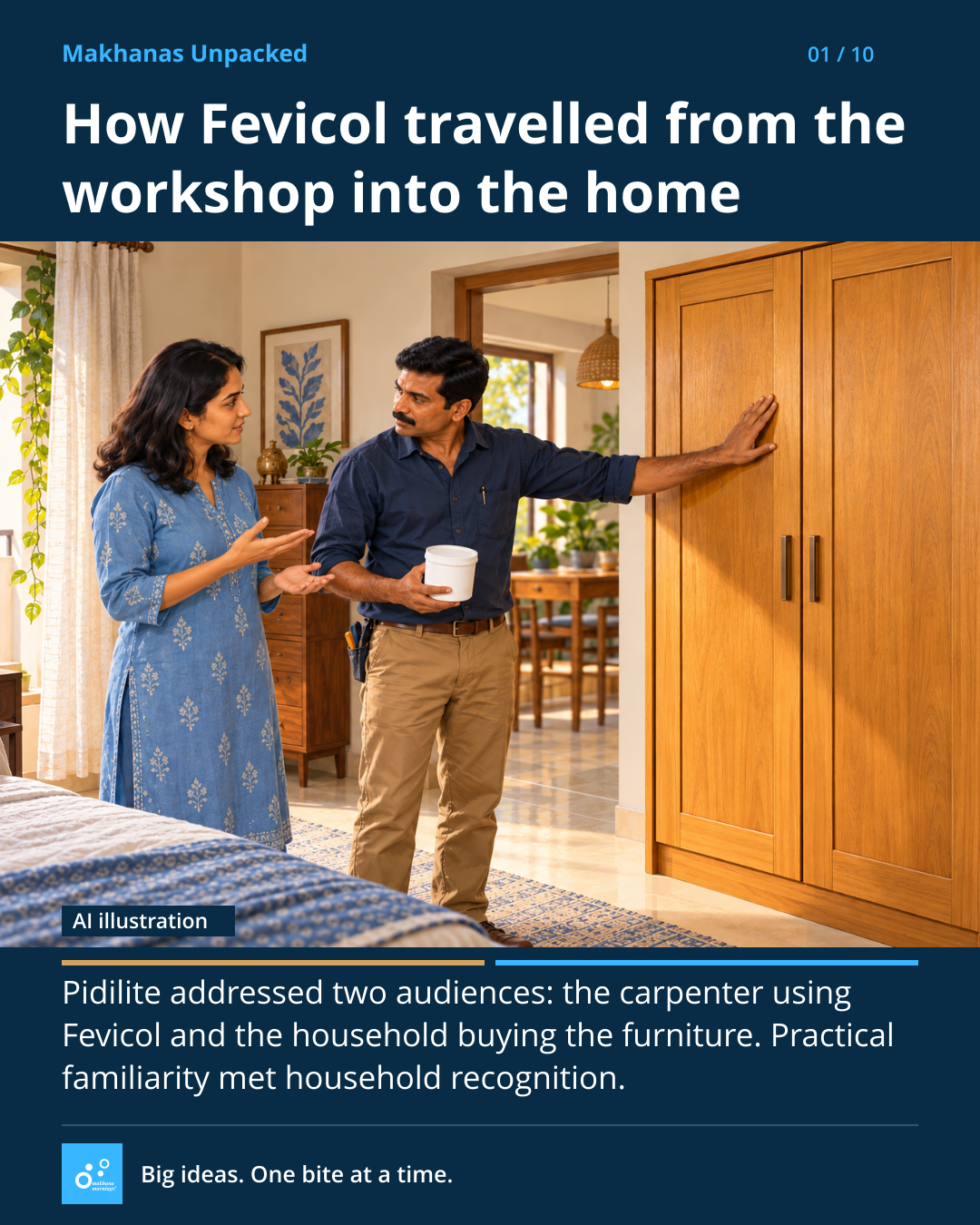
How Fevicol travelled from the workshop into the home
Pidilite addressed two audiences: the carpenter using Fevicol and the household buying the furniture. Practical familiarity met household recognition.
AI illustration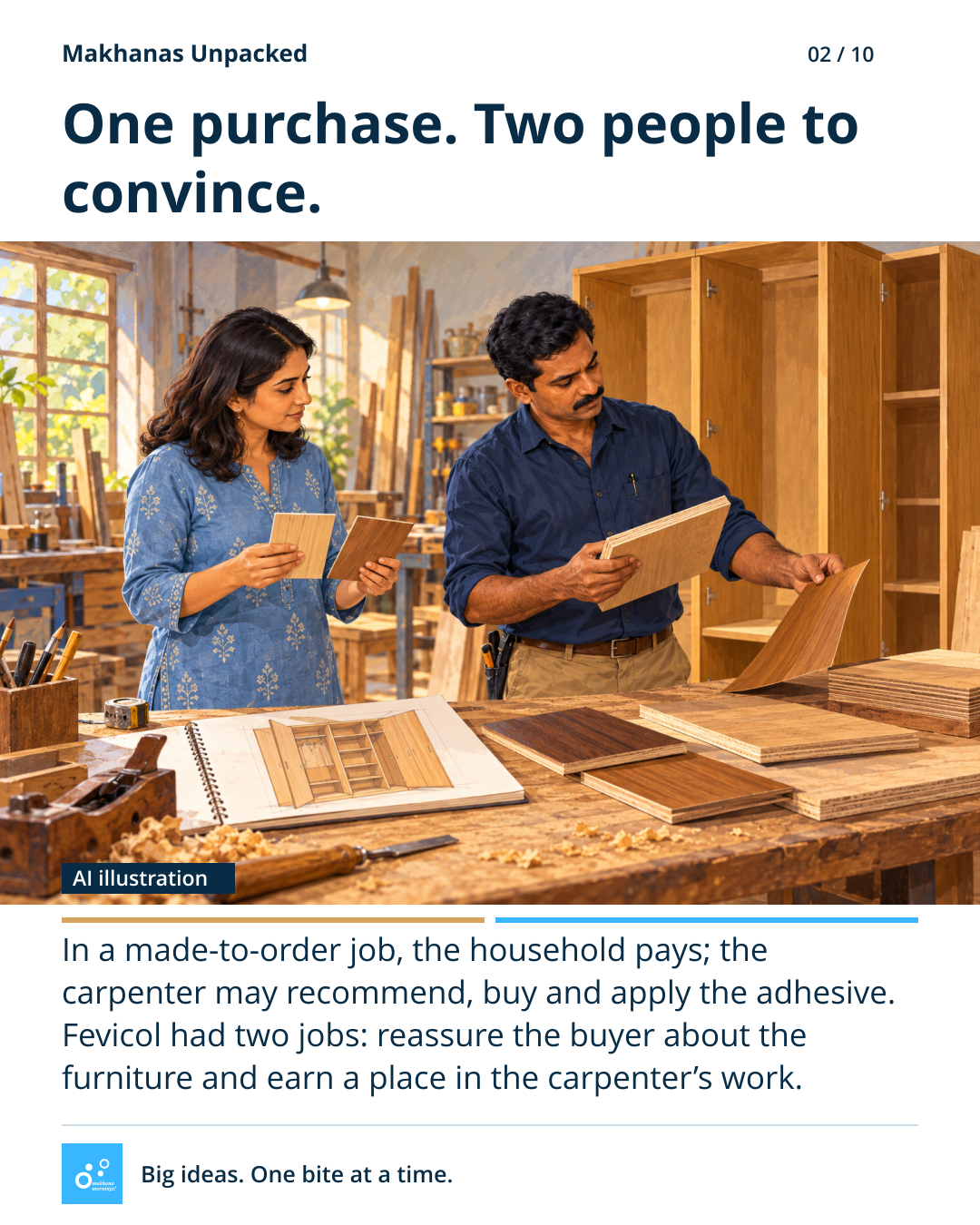
One purchase. Two people to convince.
In a made-to-order job, the household pays; the carpenter may recommend, buy and apply the adhesive. Fevicol had two jobs: reassure the buyer about the furniture and earn a place in the carpenter’s work.
AI illustration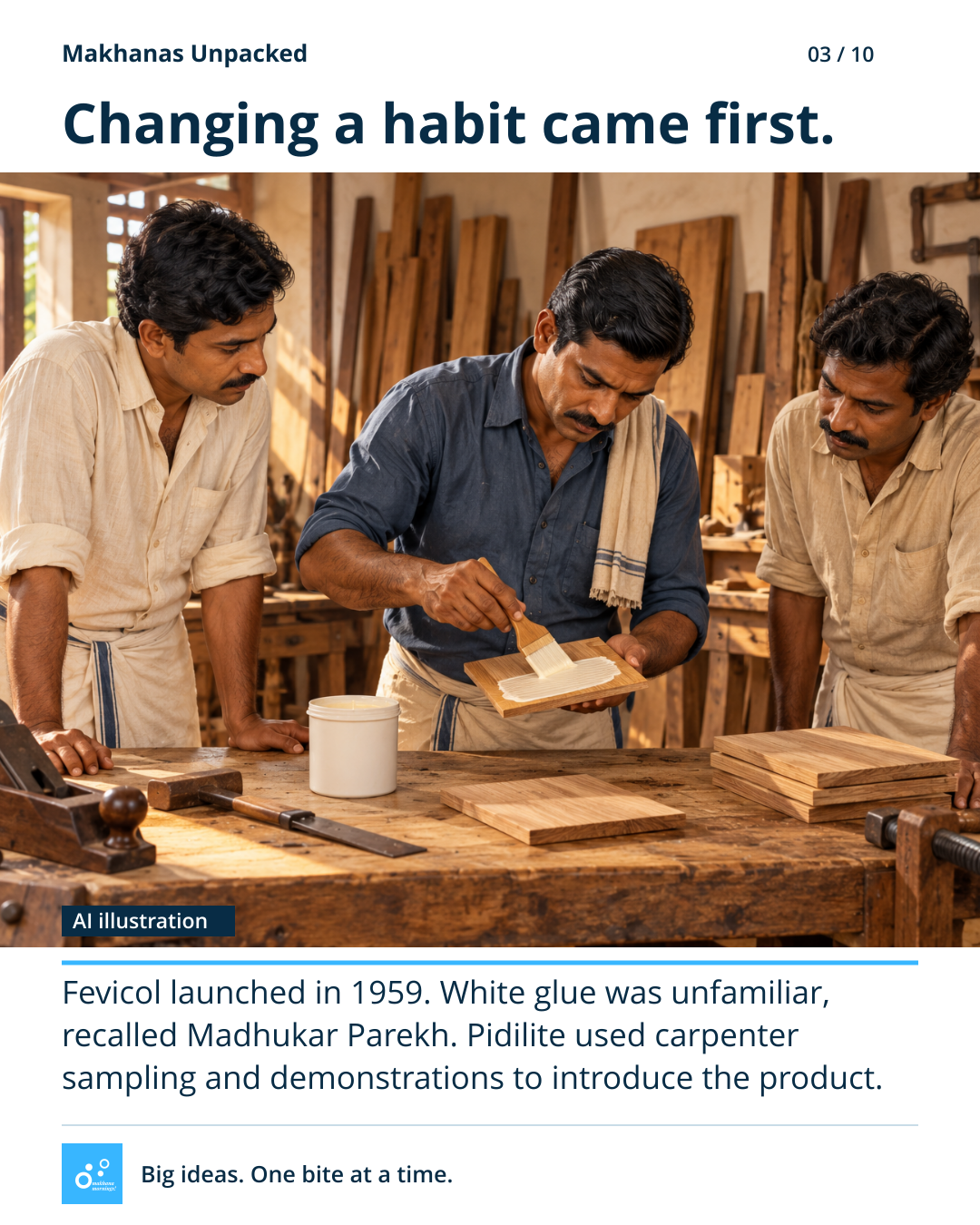
Changing a habit came first.
Fevicol launched in 1959. White glue was unfamiliar, recalled Madhukar Parekh. Pidilite used carpenter sampling and demonstrations to introduce the product.
AI illustration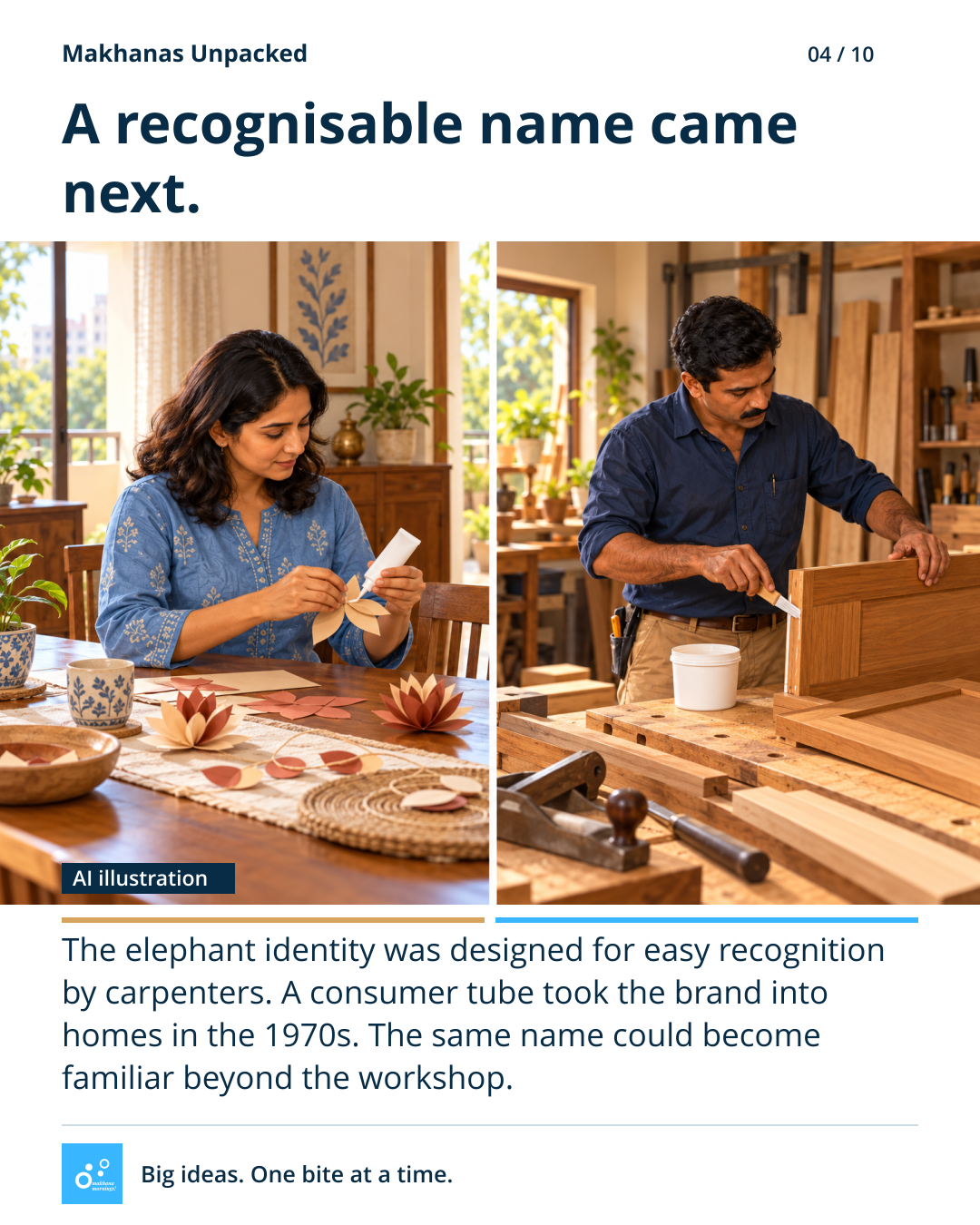
A recognisable name came next.
The elephant identity was designed for easy recognition by carpenters. A consumer tube took the brand into homes in the 1970s. The same name could become familiar beyond the workshop.
AI illustration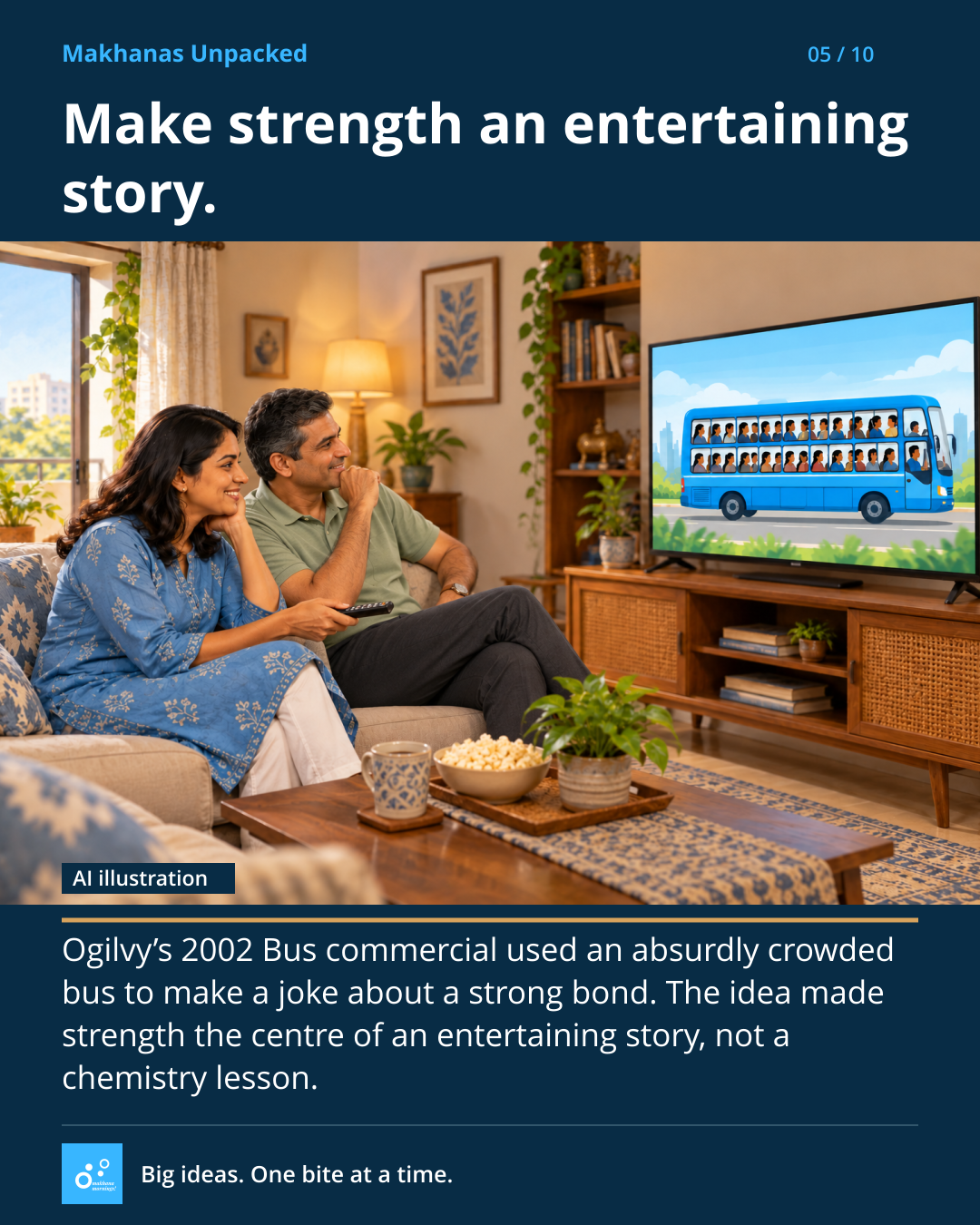
Make strength an entertaining story.
Ogilvy’s 2002 Bus commercial used an absurdly crowded bus to make a joke about a strong bond. The idea made strength the centre of an entertaining story, not a chemistry lesson.
AI illustration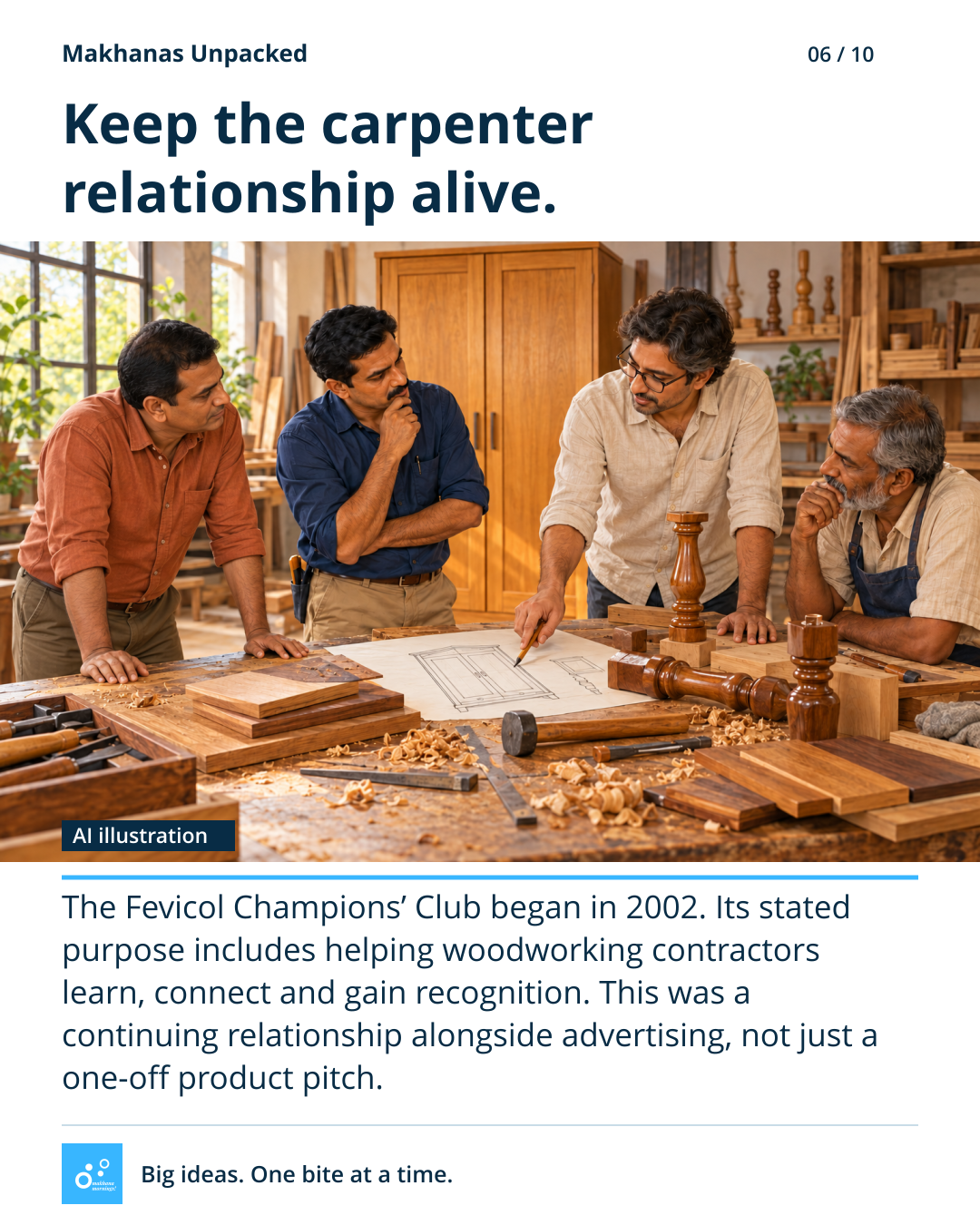
Keep the carpenter relationship alive.
The Fevicol Champions’ Club began in 2002. Its stated purpose includes helping woodworking contractors learn, connect and gain recognition. This was a continuing relationship alongside advertising, not just a one-off product pitch.
AI illustration
Make the name available for the job.
Fevicol is available through plywood shops, putting it where carpenters buy materials. Advertising builds recognition; distribution makes the brand available for the job.
AI illustration
Get the household to ask about it.
The Jija Saala campaign, described in Pidilite’s FY2022–23 report, asked consumers to check that Fevicol was used in their furniture. The buyer did not need to become an adhesive expert to ask for the brand.
AI illustration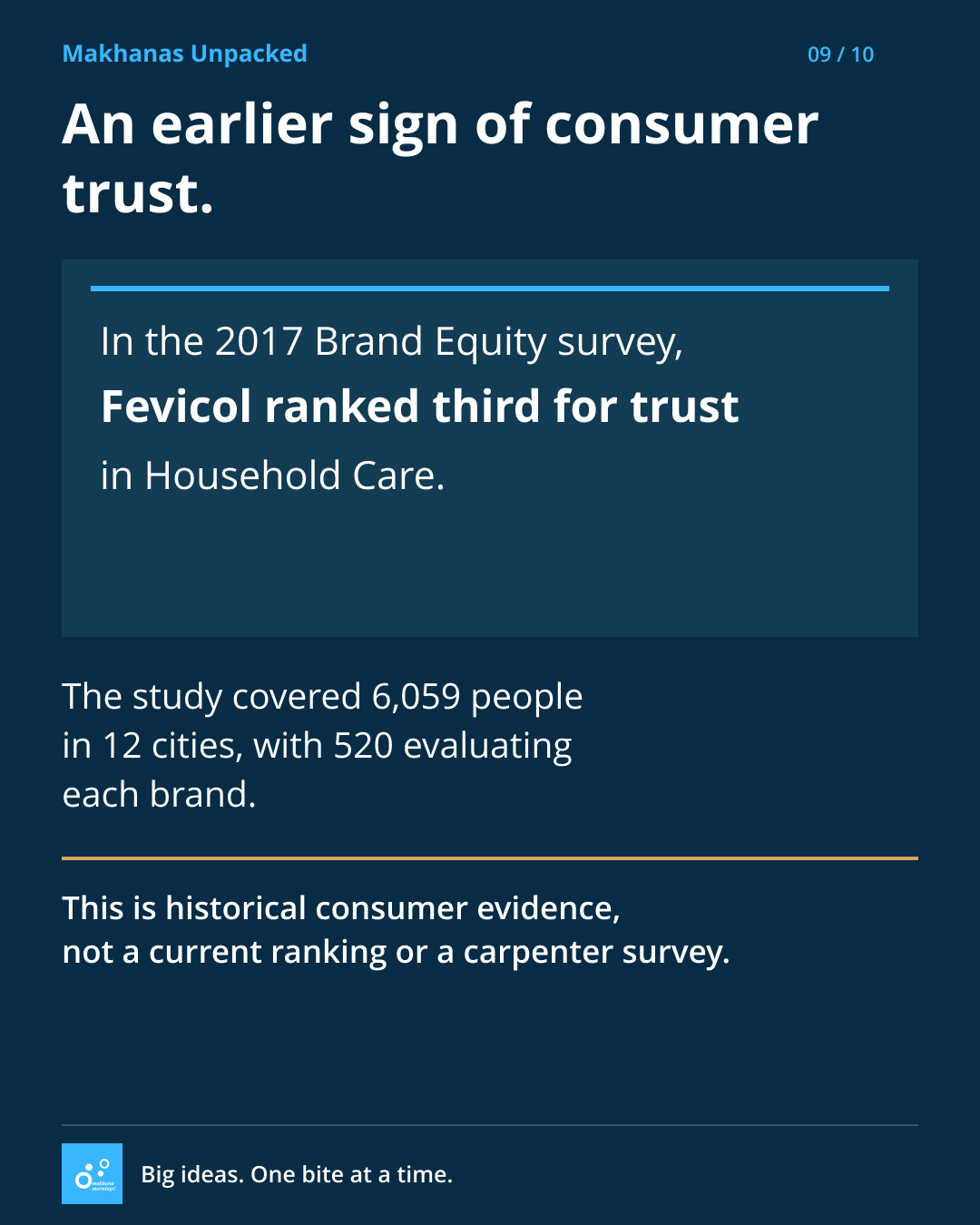
An earlier sign of consumer trust.
In the 2017 Brand Equity survey, Fevicol ranked third for trust in Household Care. The study covered 6,059 people in 12 cities, with 520 evaluating each brand. This is historical consumer evidence, not a current ranking or a carpenter survey.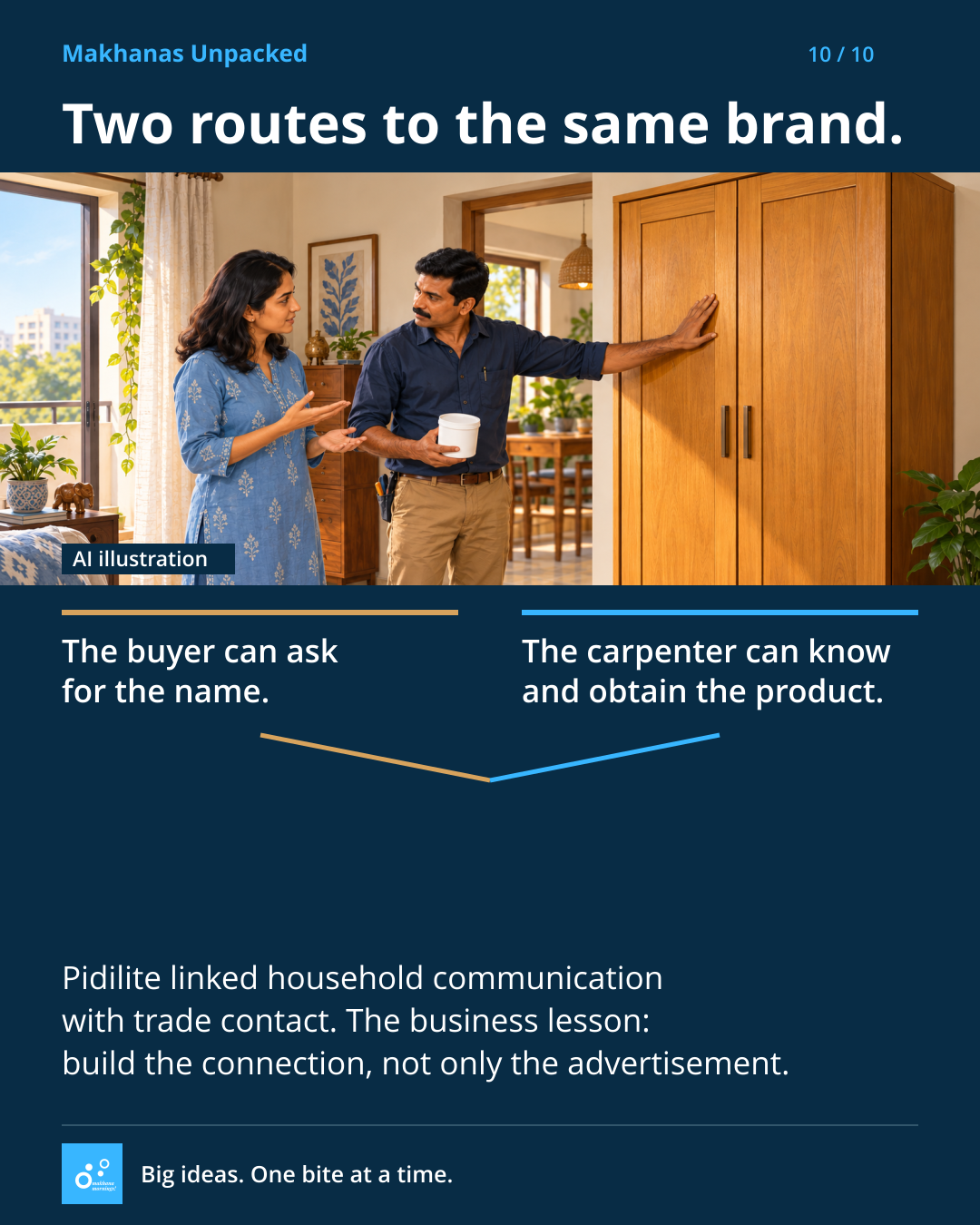
Two routes to the same brand.
The buyer can ask for the name. The carpenter can know and obtain the product. Pidilite linked household communication with trade contact. The business lesson: build the connection, not only the advertisement.
AI illustration
First, give the carpenter a reason to try it
Pidilite dates Fevicol's launch to 1959. Its historical presentation records carpenter sampling and product demonstrations in the following decade.
The product itself addressed a working problem. Pidilite describes its white synthetic resin adhesive as an alternative to the cumbersome animal-based glue carpenters had used. The important starting point was therefore not a slogan. It was a proposed improvement to the material used on the job.
Madhukar Parekh recalled in 2010 that white glue was unfamiliar to customers. Changing established habits was a challenge, and the early business remained small for years.
Ogilvy's elephant identity, Parekh recalled, was intended to be friendly and accessible to carpenters. Recognition was a practical design choice, not just decoration.
Give the household a story, not a chemistry lesson
Pidilite also introduced a small consumer tube in 1970, giving Fevicol a place outside professional woodworking and within household reach.
Ogilvy's archive dates Fevicol's Bus commercial to 2002. The creative proposition was adhesive strength, but the route to it was humour. Rather than asking viewers to understand a formulation, the advertisement made the brand the punchline.
The scene features an improbably crowded bus travelling through Rajasthan. The passengers and their precarious positions create the visual exaggeration; a Fevicol sign provides the reveal. It is an advertising association, not a literal demonstration that glue makes an overloaded bus safe.
Pidilite's 2013 Raksha Bandhan campaign shows how that idea could be refreshed without abandoning it. Animated elephant siblings playfully avoid a sister carrying a rakhi, then return to form the logo. In the company's announcement, marketing chief Anil Jayaraj explained the aim: express the strength proposition simply and entertainingly.
The same announcement planned television alongside digital activity, visibility at trade outlets and contractor contact programmes. That is a useful detail: household communication and trade contact were not separate explanations invented afterwards. They appeared together in the campaign plan. A familiar festival provided a new setting for the same promise.
Make durability feel like something from home
For Fevicol's 60th anniversary in 2019, the Sofa film gave that promise a domestic setting. Director Prasoon Pandey later explained that its inspiration included his family's old two-seater sofa. Reupholstering revealed traces of earlier fabrics, each associated with another stage of family life.
That detail explains the creative choice. Instead of presenting longevity as a technical number, the story gave viewers an object that could outlast changing fashions and family circumstances. The furniture stayed recognisable while life around it changed. This was storytelling about durability, not independent evidence of a sixty-year product guarantee.
Pandey described the creative process as a collaboration between Pidilite, Ogilvy and Corcoise. They committed to a ninety-second film: enough room for a household story rather than only a short product claim.
Keep showing up in the workshop
Parekh described quarterly furniture-design books, office demonstrations and social occasions for carpenters. These offered job ideas, product knowledge and direct company contact alongside the advertising.
Fevicol's community history dates the Champions' Club to 2002. Its stated purpose includes helping woodworking contractors learn techniques, develop contacts and gain recognition. This gives the relationship a continuing form beyond a single demonstration or purchase. Participation, however, is not by itself proof of exclusive loyalty.
Availability supplies another connection. On its February 2026 earnings call, Pidilite management described Fevicol's presence in plywood outlets. In this strategy, a remembered name needs a practical route into the job. Advertising and a trade relationship would be incomplete if the adhesive could not be obtained when required.
What the evidence actually shows
There is evidence of consumer trust beyond the campaign accounts. In Brand Equity's 2017 survey, Fevicol ranked third in Household Care. The study covered 6,059 respondents across 12 cities, with 520 evaluating each brand and scores weighted by familiarity. This is historical consumer evidence, not a current ranking, a carpenter survey or proof that a particular campaign caused the result.
Turn recognition into a question
The bridge became explicit in the Jija Saala campaign. Pidilite's FY2022–23 annual report describes a deliberate move beyond its strong-bond theme: encouraging consumers to verify that Fevicol was used in their furniture. The intended action was concrete. The household could ask about the adhesive without learning how to formulate one.
The Crunch
That is the central connection: the buyer can recognise and request a name, while the maker can approach the same decision through working experience. Neither role disappears. The point is to make their conversations meet, rather than assuming the person paying must select every technical input unaided.
The record documents decisions and campaign intentions, not how much trust each activity created or how many sales one advertisement caused. The useful lesson is narrower: building recognition for an ingredient can involve both a public promise and a sustained relationship with the people who actually use it.