
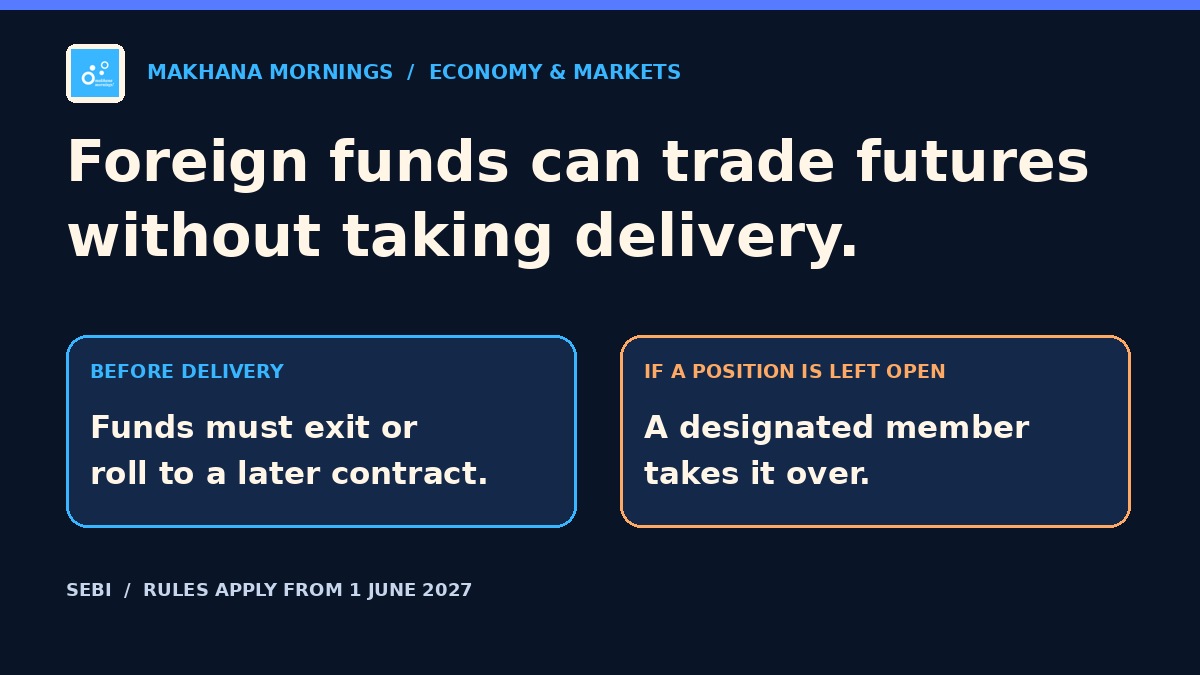
A foreign fund will be able to trade a commodity futures contract that can end in delivery, but it will not be the one receiving or delivering the commodity. India’s markets regulator has put a deadline between those two events and named who takes over if the fund misses it.
The Securities and Exchange Board of India (SEBI) issued the final circular on 27 November. From 1 June 2027, registered foreign portfolio investors (FPIs) will be able to trade eligible physically settled non-agricultural commodity derivatives on recognised exchanges. Their access was previously limited to cash-settled contracts and indices based on non-agricultural commodities. The change does not open agricultural contracts or options in goods to them.
The fund has to exit before delivery begins
A cash-settled contract ends with a payment based on the price difference. A physically settled contract can instead require the parties still holding it to deliver or receive the commodity. For foreign funds under this rule, the relevant cutoff is the start of the tender period, when the exchange’s delivery process begins, not simply the contract’s expiry.
Starting three trading days before that period, an FPI cannot place a new trade that increases its position in the expiring future. Positions created when options on futures expire are not treated as fresh positions for this restriction. By market close on the day before tender begins, the fund must have closed its position or rolled it over to a later contract.
A designated member takes over positions left open
An FPI must have an agreement in place before trading these contracts. If it still holds an expiring position at the cutoff, the exchange process transfers that position to the designated trading or trading-cum-clearing member’s own account at the exchange’s closing or daily settlement price. The fund’s position is closed, and the member takes over the rights and obligations, including any tied to delivery.
That handoff can leave the member needing extra margin, the collateral that supports the trade. The clearing member must give the designated intermediary notice of the position a day before the cutoff. The intermediary can also agree a charge in advance for taking on the risk if the handoff is triggered. It is a contractual charge, not a flat fee set by SEBI.
More participants do not guarantee more liquidity
SEBI wants to deepen institutional participation. A wider pool of participants could make it easier for other traders to find a buyer or seller, but the circular does not guarantee that outcome. Exchanges and clearing corporations still have to standardise the agreements, set the process for transfers after market close and give the member enough visibility to arrange margin.
The practical change is who can trade before delivery and who carries the position afterwards. The first test will be whether funds and intermediaries sign up, then whether trading becomes easier in the contracts businesses use to manage price risk.


Leave your thoughts