
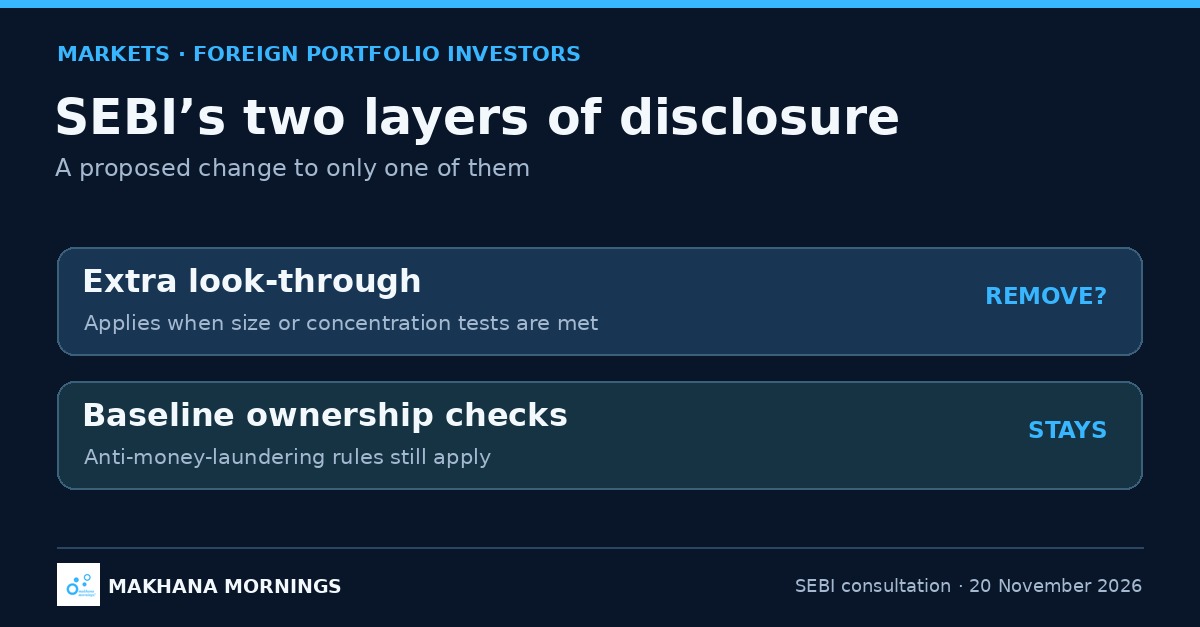
SEBI has proposed removing an additional disclosure framework for foreign portfolio investors. Its 20 November consultation does not propose ending all checks on who owns or controls an overseas fund. It would remove a separate, more detailed layer that applies to certain large or concentrated holdings.
Which disclosures are on the table
The extra framework can apply if an investor has more than half its Indian equity portfolio in one Indian corporate group, or if its Indian equity assets exceed ₹50,000 crore alone or with its investor group. Some investors qualify for exemptions. Where the framework applies, it requires tracing ownership, economic interests and control through the structure to individuals, without a minimum threshold. SEBI would remove this layer, including its application to subscribers to offshore derivative instruments and segregated portfolios.
Which checks would stay
The baseline beneficial-ownership checks under India’s anti-money-laundering rules would remain. The ownership thresholds are 10% or 15%, depending on the entity’s legal form. The consultation does not propose changing those thresholds. The distinction matters for a pooled fund: removing a requirement to identify every underlying person is not the same as removing the obligation to identify the beneficial owners covered by the baseline rules.
A compliance proposal, not an inflow forecast
SEBI cites more than ₹5.61 lakh crore of net foreign portfolio outflows from Indian equities between October 2024 and October 2026. It says the extra layer can raise compliance costs, particularly for funds with multiple ownership levels, but acknowledges that several factors can drive outflows. The figure does not establish how much money the rule deterred or what would return if it were removed. Comments are open through 11 December; the current framework still applies.
Read more on which sectors drew foreign equity inflows in the first half of November.




Leave your thoughts