
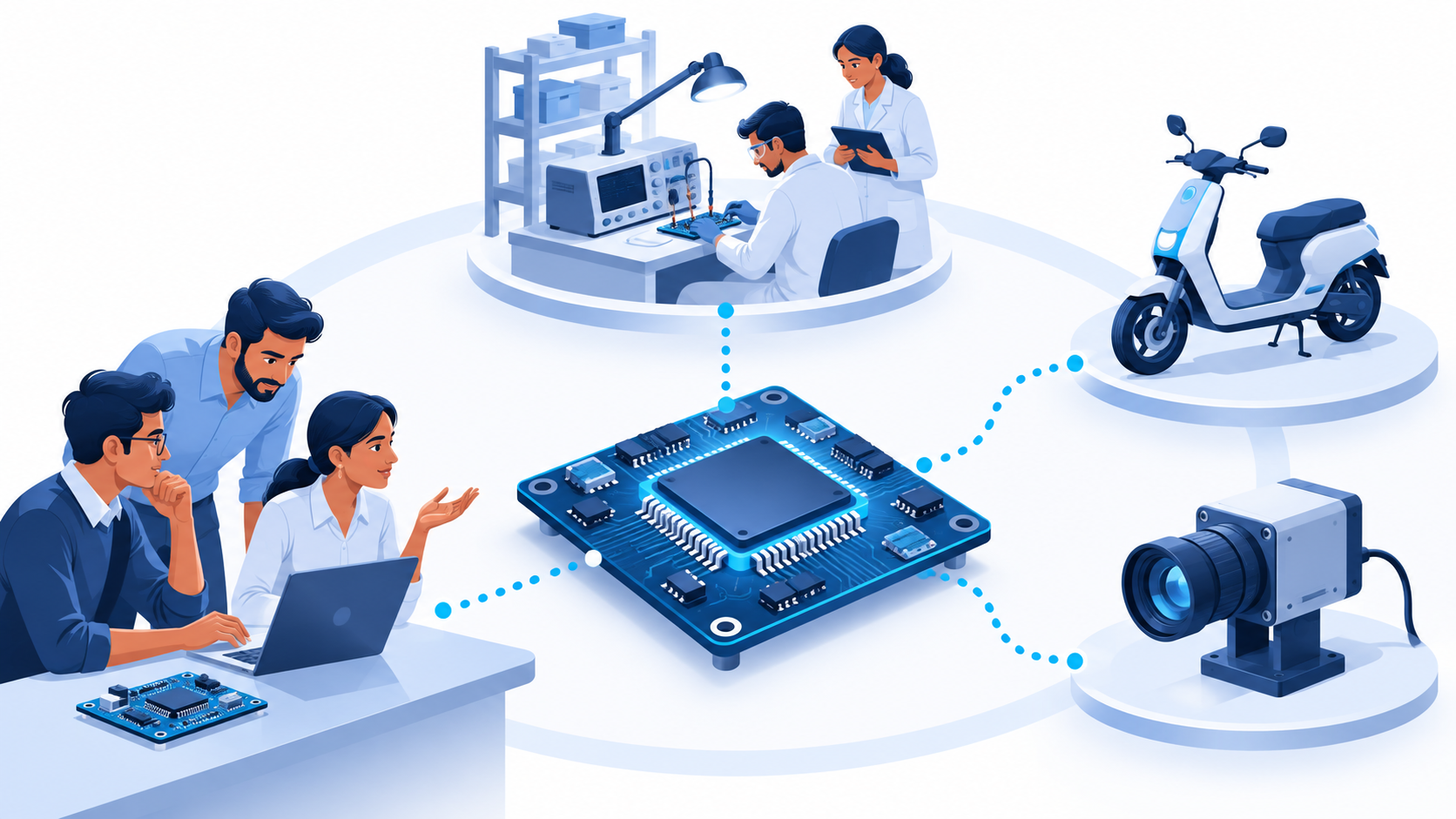
A chip can work in a laboratory without being ready for a manufacturer's product. For an Indian chip-design startup, finding the first customer can therefore mean finding someone willing to help test and refine the product, not simply someone willing to buy it.
IIT Bombay’s Society for Innovation and Entrepreneurship (SINE) is organising its new ACE accelerator around that gap. Its first cohort focuses on semiconductors, with industry partners involved alongside technical mentors and investors.
The programme was formally launched on October 9, 2026. IIT Bombay published the details on November 11, 2026. This is a recently disclosed programme, not a new chip factory or evidence that its startups have already won orders.
The Breakdown
ACE plans to select six to eight semiconductor startups and match each with an industry partner. The support includes technical facilities, mentoring and opportunities for proofs of concept or corporate pilots. Ather Energy, ElectraEV and ideaForge are among the named partners.
Potential equity investment of up to ₹5 crore is conditional on evaluation. It is not a grant promised to every participant. Nor does a partner's involvement establish a purchase commitment.
The practical distinction is between funding a design and testing whether a customer can use it. Putting a potential buyer into that process can expose requirements before a startup commits further resources. It cannot guarantee that the resulting product will be selected.
What a customer relationship looks like
There are relevant examples outside the accelerator. In September 2026, Atomo founder Pratik Parmar described using an overseas-designed processor because suitable Indian alternatives had not been mature enough when his company selected its hardware three years earlier.
Mindgrove's work with camera manufacturer Prama illustrates a different stage: developing a chip with an intended product application. In September 2026, Mindgrove co-founder Shashwath Ramkumar estimated that reaching a commercial product could still take roughly another year. That was a forecast, not a completed rollout.
Neither example is evidence of participation in ACE. They explain why the customer's product-development schedule matters alongside the chip designer's progress.
Why This Matters
For founders considering an accelerator, the useful questions go beyond the size of the possible investment. What will a pilot test? Who decides whether it succeeds? What technical work remains before the customer can place an order?
For industrial partners, a pilot is a way to evaluate a proposed component. For investors, it can provide evidence about customer fit. Neither should be counted as recurring sales before commercial agreements and deliveries exist.
The Crunch
ACE's proposition is to bring potential customers closer to the design process. Its eventual value will depend on what those engagements produce. The evidence to watch is successful testing followed by commercial adoption, not the accelerator's launch alone.
Related categories: Technology & AI
Original AI-generated conceptual illustration, not a depiction of SINE ACE participants, facilities or specific products.



Leave your thoughts