
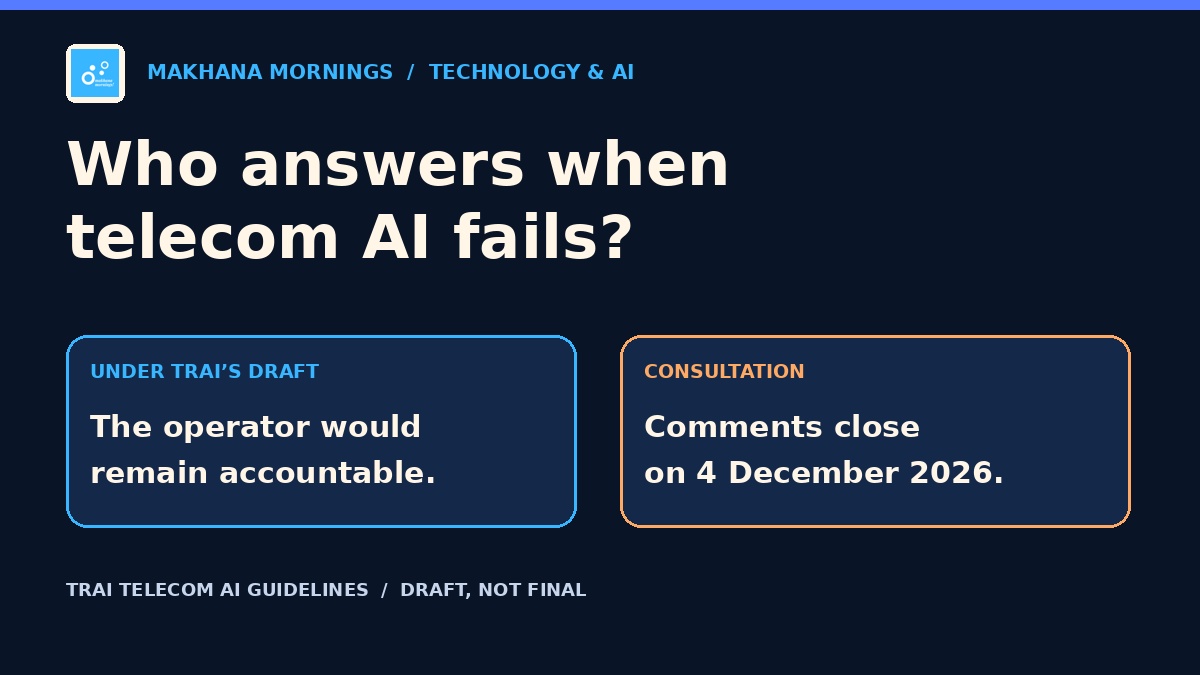
A telecom operator can buy an AI system from a vendor. Under a draft from the Telecom Regulatory Authority of India (TRAI), it could not hand the vendor responsibility for what the system does. TRAI has extended the deadline for written comments from 27 November to 4 December 2026. The proposals are not final rules.
The draft puts the decision to deploy AI inside the operator
The proposal covers licensed or authorised entities that use, or intend to use, AI in telecom networks or services. It would have them keep an inventory of their AI systems, classify each by risk and require a designated officer’s approval before use. The risk assessment would look at the system’s importance to the service and its potential impact on operations, finances and consumers.
Buying a system is different from handing over responsibility
Imagine an operator buys a tool that decides where to reroute network traffic when a link goes down. If the tool makes the wrong call, the operator needs to know what the tool changed, who can intervene and what information the supplier must provide. This is an illustration of the draft, not a reported incident.
The draft proposes checks on third-party systems before deployment, along with contract terms covering audit and inspection rights, incident handling and responsibility. The operator would remain accountable for outcomes whether it built the system itself or bought it. A vendor’s promise to fix its software would not replace the operator’s responsibility to manage what happens on its network.
Not every logged incident would go to TRAI
The draft distinguishes between recording an incident and reporting it to the regulator. Operators would keep a central record and investigate incidents, while those classified as high or critical severity would be reported to TRAI. A separate record would track AI-related harm reported by users and how it was resolved. The final wording, if issued, will determine how operators distinguish incidents they manage internally from those they must report.



Leave your thoughts