
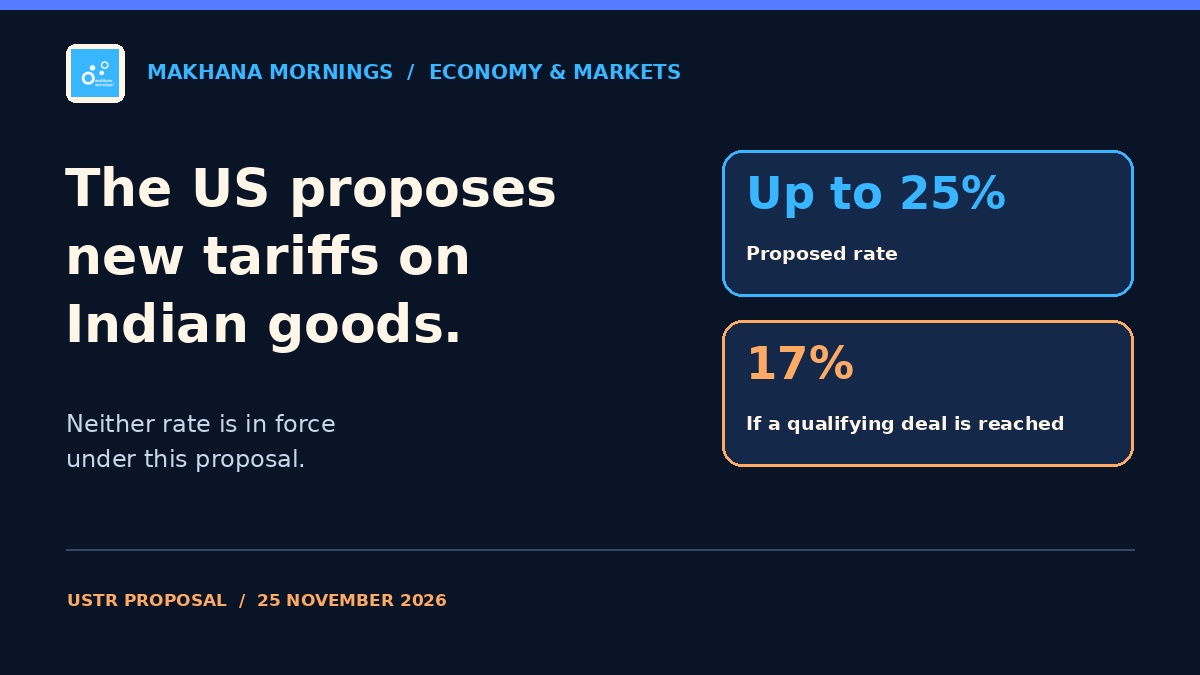
The United States has proposed tariffs of up to 25% on goods from India, with exemptions. Its trade office also put 17% on the table if India reaches a trade agreement that addresses the investigation’s findings. Neither figure is a new rate importers have to pay today under this proposal.
The 25% and 17% figures describe different scenarios
The Office of the United States Trade Representative announced the proposal on 25 November as part of actions involving 14 trading partners. For India, the starting point is up to 25%, net of existing Section 301 tariffs. The notice also asks whether other duties, including those under Section 232, should affect the calculation.
The 17% figure is conditional. It is a rate the trade office proposes to consider if India and the US reach a responsive Agreement on Reciprocal Trade. It is not a signed rate, an automatic discount or a second charge to add to the 25%.
There is already a separate Section 301 measure at 10% on covered Indian goods, with its own exemptions. That July decision came out of a different investigation. The November proposal is not a simple instruction to add 25 percentage points to that 10%.
India’s Commerce Ministry said late on 25 November that it was examining the notice. It reiterated its position that India has no structural excess capacity in any sector and said trade concerns should be handled through the ongoing bilateral negotiations.
A product’s customs code matters more than its industry label
The proposal would exclude some articles already subject to separate Section 232 duties, including covered metal articles, some vehicles and parts, and patented pharmaceutical articles. An exemption from this proposed tariff does not cancel duties that already apply.
Annex A of the draft lists individual exemptions by US customs code. Some come with conditions: entries marked “Pharma,” for example, would qualify only for pharmaceutical uses. And the notice asks whether some textiles and apparel could enter at a reduced rate up to a specified volume. It does not establish that arrangement.
The public hearing comes before any final tariff schedule
USTR’s India notice sets 5 January 2027 as the deadline for written comments and for requests to appear at the hearing, accompanied by a summary of the proposed testimony. Public hearings are due to begin on 25 January. These are consultation milestones, not dates when the duties begin. Exporters and US buyers can use the interval to check the exact tariff code, identify any existing duties and review who bears an increase under their contracts.
The Crunch
The number in a tariff headline tells you less than three things in the notice: whether the rate is final, whether your product is covered and how it interacts with existing duties.




Leave your thoughts