
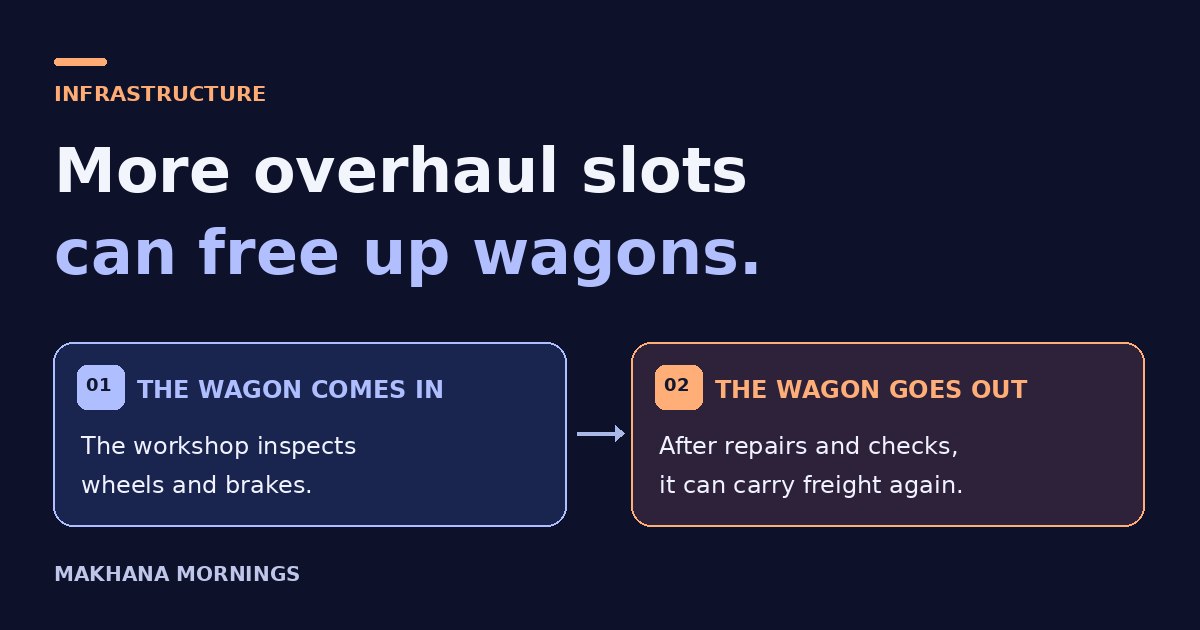
A freight wagon waiting for a major overhaul is a wagon that cannot carry another load. Building new wagons adds to the fleet. Getting existing ones through workshops faster can make more of that fleet usable. East Coast Railway’s proposed expansion in Visakhapatnam is aimed at the second problem.
Rail Vikas Nigam Limited (RVNL) said on 22 November it was the lowest bidder for the Vadlapudi Wagon Workshop upgrade. The project is intended to raise monthly periodic overhaul capacity from 300 to 600 wagons. RVNL’s exchange filing puts the bid at ₹348.49 crore, including taxes, and lists a 24-month execution period. The announcement identifies the lowest bidder; it does not announce a formal award or a construction start date.
A periodic overhaul goes beyond a routine check
Indian Railways distinguishes periodic overhauls from regular checks in railway yards and the lighter maintenance carried out at designated depots. A periodic overhaul takes a wagon into a workshop for more extensive work. Depending on the wagon and what the inspection finds, that can include checking the steel structure beneath the body for cracks or alignment problems, examining wheelsets and overhauling brake components.
Vadlapudi is an existing workshop, not a new wagon factory. When the Ministry of Railways announced its commissioning in 2020, it said the site could handle repairs for 200 wagons a month. The latest tender describes a move from 300 to 600. Those figures show how the planned scale has changed; they do not establish how many wagons the workshop actually completes in a typical month today.
The benefit depends on how long wagons spend off the network
More workshop capacity gives a railway more room to schedule wagons for overhaul. The benefit is greatest if wagons currently spend time waiting for a workshop slot. If, instead, the delay is in getting wagons to the site, finding spare parts or clearing them after their checks, adding capacity at just one stage may not get wagons back on the network much sooner.
That is why two measures matter after the upgrade: how many wagons the shop completes each month and how many days each wagon spends out of service. The first tells East Coast Railway what the workshop can deliver. The second gets closer to what matters to a freight customer: whether wagons are available for the next load.
The Crunch: Vadlapudi’s target is 600 overhauls a month, not 600 new wagons. More overhaul slots can help the railway get more work from the fleet it already owns, but only if wagons actually return to service sooner.



Leave your thoughts