
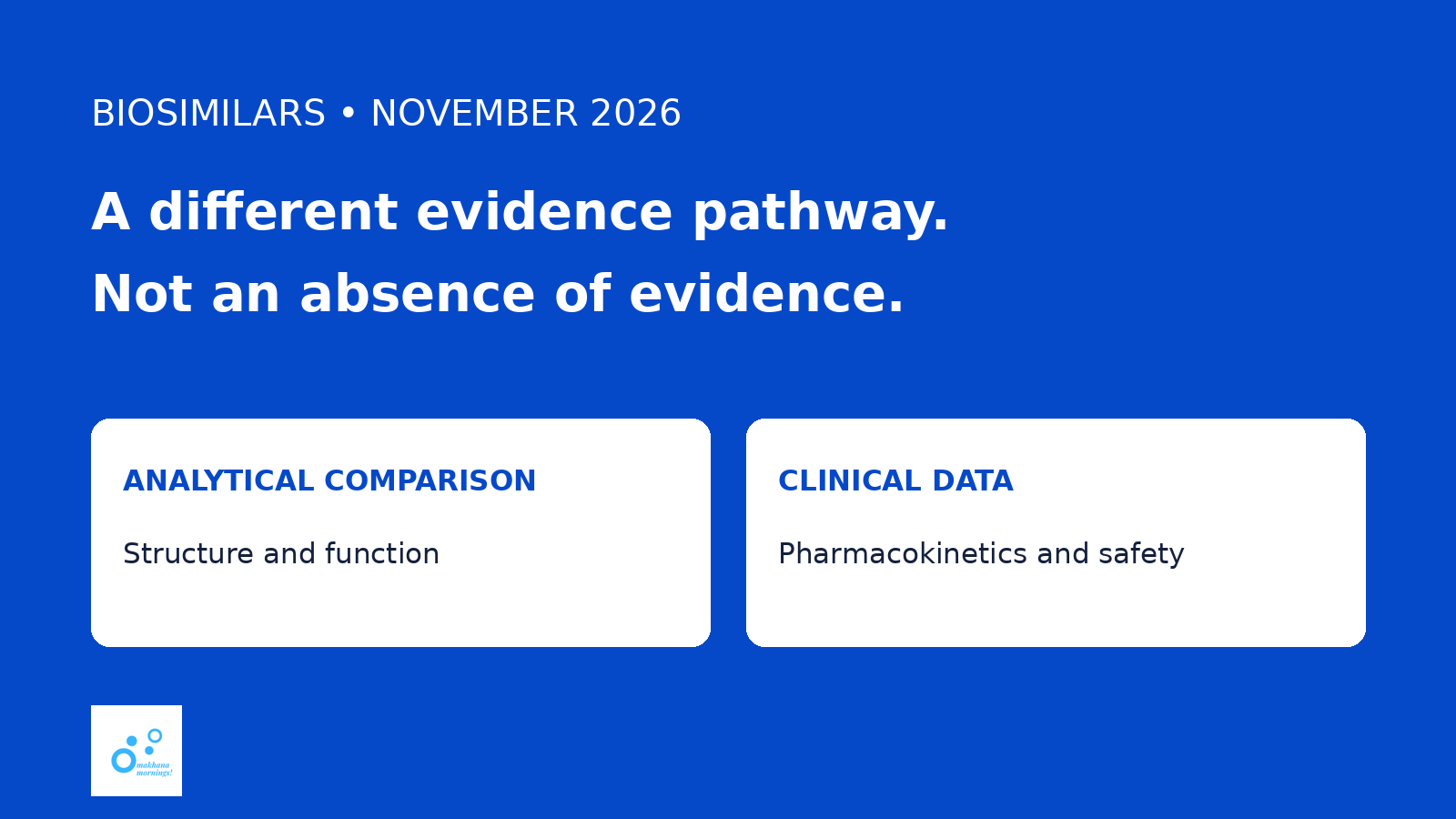
Biocon’s latest European milestone is not only about another market approval. It also offers a concrete example of how regulators are changing the evidence they seek for some biosimilar medicines.
In its 18 November exchange filing, Biocon said the European Commission had granted marketing authorisation for Pebrilzo, its pertuzumab biosimilar, for specified HER2-positive breast-cancer uses. The company describes it as the first biosimilar authorised under the European Medicines Agency’s tailored clinical approach.
The Breakdown: what the regulator independently confirms
EMA’s September committee highlights independently identify Pebrilzo as the first biosimilar recommended for approval through that approach. The recommendation came on 17 September. The new Commission-authorisation announcement comes from Biocon; the two milestones should not be collapsed into one date.
The important distinction is between changing an evidence package and dispensing with evidence. A biosimilar must establish similarity to an existing reference medicine. Here, that reference is Perjeta.
Why This Matters: testing what can reveal a difference
EMA’s published explanation says a separate comparative efficacy study may not be required for well-characterised biological substances when analytical comparisons provide a more sensitive assessment of similarity, alongside pharmacokinetic and appropriate safety studies. Pharmacokinetics examines how the body handles a medicine.
The adopted reflection paper sets conditions, rather than a universal exemption. These include understanding how the molecule works, sufficiently sensitive tests of structure and function, and a manufacturing process that can maintain consistency. It says waiving the comparative efficacy study is not acceptable where sensitive analytical methods are lacking or the mechanism of action is not understood.
Biocon says its pertuzumab evidence combined structural and functional characterisation with comparative clinical pharmacokinetic data. That is not the same as an approval without clinical evidence. Nor does the announcement establish a quantified reduction in development costs or a selling-price discount.
The Crunch: a regulatory pathway is not a launch receipt
Our earlier US Pebrilzo story examined the separate licensed-launch timetable. This European development concerns a different jurisdiction and, importantly, the evidence pathway used in review.
The business implication, in our reading, is that analytical capability and manufacturing consistency remain central even when a particular trial requirement can be tailored. The announcement does not establish immediate pharmacy availability, country-level reimbursement or patient savings. Those require their own evidence after the regulatory headline.
Cover: original Makhana Mornings editorial graphic.


Leave your thoughts