
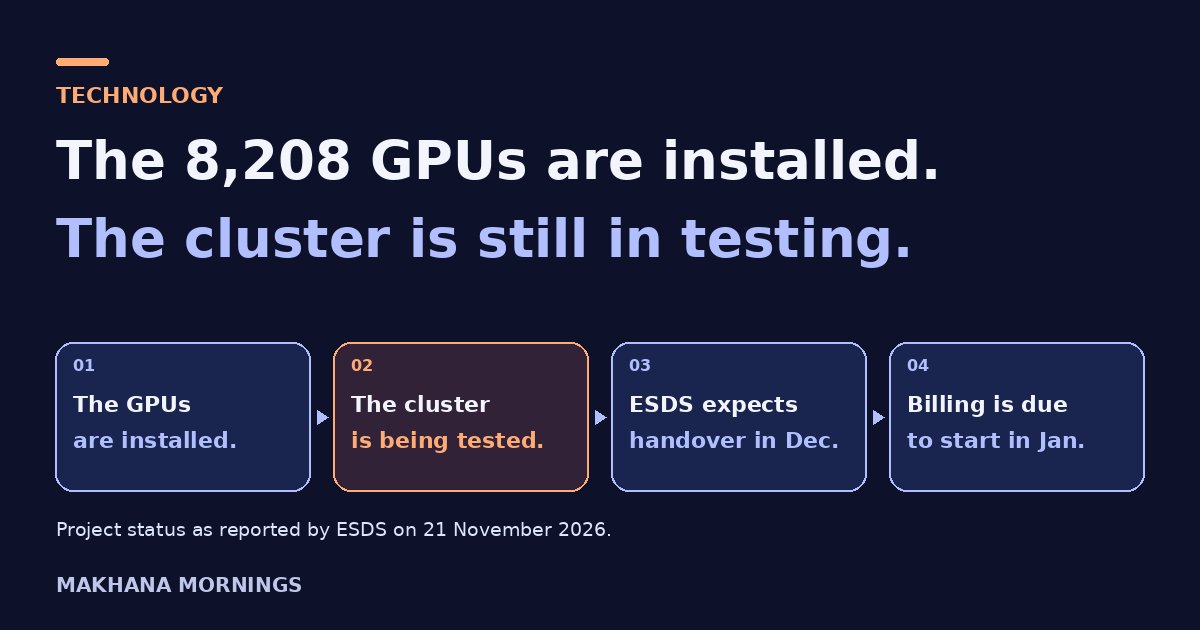
You can count the chips in a data centre long before anyone can count on the computing power they were bought to deliver. On 21 November, India’s ESDS Software Solution said all 8,208 Nvidia B300 graphics processing units, or GPUs, for its Sydney project had been installed. The cluster was still in final testing. ESDS expects handover in mid-December and billing from January 2027.
The whole cluster has to pass, not just the individual chips
A GPU cluster is a group of connected machines that run computing jobs together. Counting the installed processors tells you how much hardware is in place. The acceptance process asks another question: do the machines together provide the computing service and meet the technical requirements the buyer agreed to?
Sharon AI provides ESDS with the infrastructure in Sydney. ESDS describes its own role as operating and managing computing services for customers. The publicly filed agreement between the companies sets out the handover: they test the infrastructure together, check it against the agreed requirements and sign a commissioning certificate once it is accepted. That signature starts Sharon AI’s obligation to provide the contracted computing service to ESDS.
Testing, service and billing are separate milestones
The Sydney service order does not charge regular service fees during joint testing. The broader agreement allows advances under an individual service order, so the testing period tells us when recurring service charges are not yet due, rather than whether money has already moved. Sharon AI’s November results also put ESDS acceptance in December and expected billing in January. Neither company had reported completed acceptance for the ESDS cluster in the updates reviewed.
The milestones also sit on different sides of the business. ESDS accepting the cluster from Sharon AI would confirm that handover. It would not, by itself, establish how much ESDS’s own customers are using, when cash was collected or what profit the project earned.
Which milestone should you watch next?
When a company says new computing capacity is installed, look for the next dated evidence: a signed handover, followed by confirmation that regular billing has started. Each tells you something the chip count alone cannot.


Leave your thoughts