
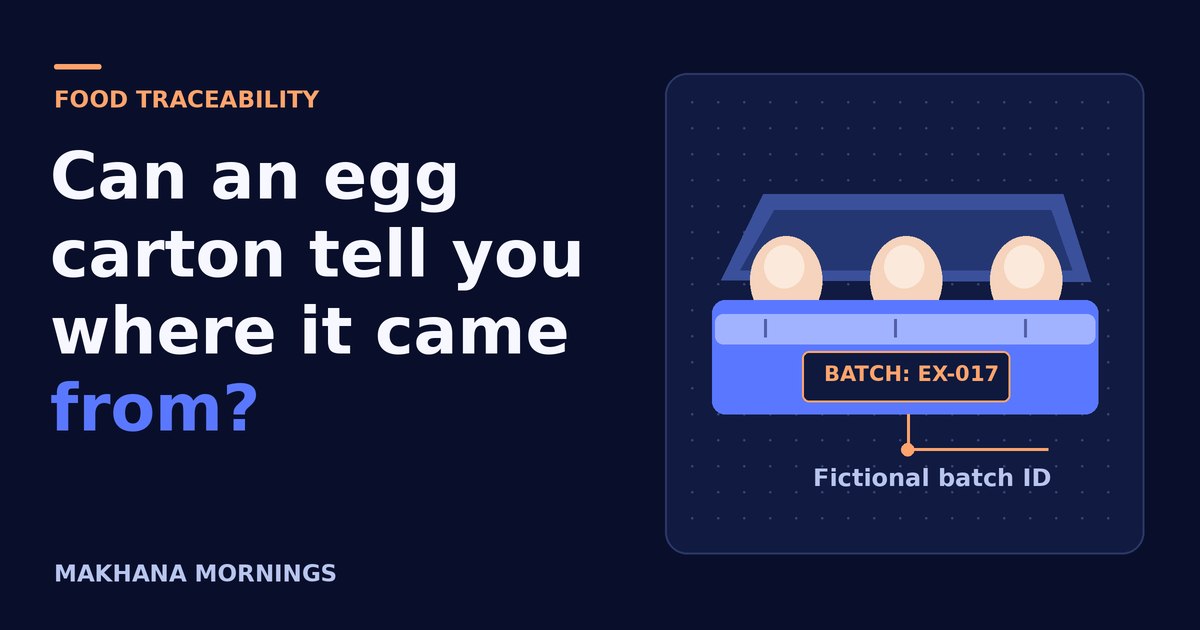
Imagine a grocer calls an egg supplier about one carton. The grocer knows the brand and the pack size. Can the supplier say which farm supplied the eggs, when they were packed, and which other stores received the same batch? A carton with a logo tells you who sold it. Answering the rest takes records that follow the eggs.
That is one way to understand Henfruit’s $15 million Series A, confirmed by its transaction counsel on 20 November. Lok Capital, DSG Consumer Partners and RPSG Capital Ventures backed the Indian egg brand. The interesting part of the business is not the carton. It is how Henfruit buys eggs from different farms and handles them before they reach the shelf.
Henfruit buys from farms and controls the packing
DSG, one of the investors, says Henfruit works with 16 contracted farms and routes eggs through its own centralised grading and packing operation. Henfruit describes sorting, washing and grading on its site. DSG also describes a system for tracing batches. Those accounts describe the company’s operating model. They do not establish that a shopper can look up the farm for every carton.
That distinction matters for expansion. Another store can stock the same carton tomorrow. To preserve traceability, the supplier also needs to know what came in, which cartons it went into, and where those cartons went. If two incoming lots are combined, the records need to show both. Otherwise, adding new outlets makes it harder to work backwards when a question comes in.
A lab result and a batch record answer different questions
A lab report tells you what was measured in the sample the lab received. A batch record tells you which eggs or cartons were grouped together, and can link that group to the supplier and to dispatch records. A report posted online does not establish a connection to the carton in your hand unless there is a documented link to the lot.
India’s food safety training guidance for eggs describes traceability as identifying, where practicable, the producer, the transporter and the grading or packing site, with verifiable records for lots. For a retailer assessing a new supplier, the practical check is to pick one carton at random. Can the supplier trace it back to its inputs and forward to the outlets that got the same lot? That is a better test of the records than a tour of the packing line alone.
The Crunch
A brand can print the same carton for every city. To make each carton traceable, it needs to keep the records behind it consistent as it adds farms, routes and stores.


Leave your thoughts