
A freight corridor moves trains. A cargo terminal gives businesses somewhere to load and unload them. JSW Infrastructure’s latest allotment in Punjab concerns that second part of the logistics chain.
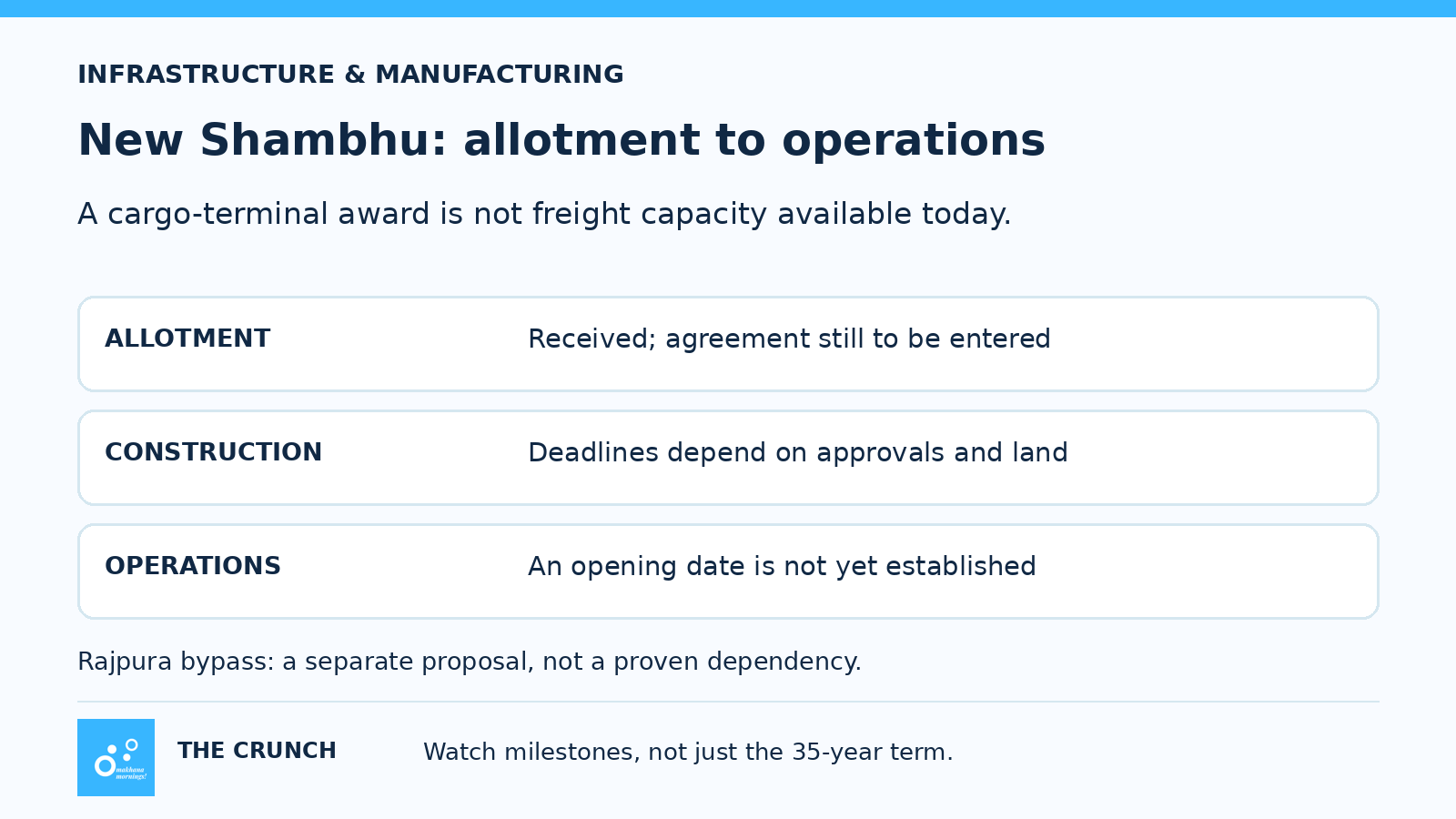
On November 13, the company disclosed that its step-down wholly owned subsidiary, JSW Minerals Rail Logistics, had received a letter of allotment from the Dedicated Freight Corridor Corporation of India for a Gati Shakti Multi-Modal Cargo Terminal at New Shambhu, near Rajpura.
The Breakdown
The assignment is to plan, construct, develop and operate the terminal on railway land. JSW disclosed an approximate contract size of ₹60 crore and a 35-year term from the allotment letter’s issue date, including construction and extension periods.
The agreement with DFCCIL is still to be entered into. Construction must begin within three months of engineering-plan approval or land handover, whichever happens later, and be completed within 18 months of that same starting point.
These are milestone-based deadlines, not an announced opening date. The filing does not establish that construction has begun.
Why the location matters
New Shambhu also features in a separate railway connectivity proposal. In February, the Railways approved a 13.46-kilometre Rajpura bypass, costing ₹411.96 crore, to connect New Shambhu with Kauli on the Rajpura–Bathinda line. Its stated purpose is to let freight trains avoid the congested Rajpura yard.
That is useful local context, not evidence that the bypass is already operational or that JSW’s terminal depends on its completion. The projects address different functions: a terminal handles cargo, while a bypass changes how trains move through the network.
The Big Picture
India’s Gati Shakti Cargo Terminal policy encourages private investment in rail-linked freight facilities. The Railways says locations are selected using industrial demand, potential cargo traffic and available railway infrastructure.
The policy also allows facilities such as warehousing and cold storage. Those possibilities should not be read as a confirmed specification for every new terminal.
For a business considering rail, the practical question is the complete journey: getting cargo to the terminal, loading it, moving it by train and delivering it at the other end. A new terminal can add an access point, but its allotment alone does not demonstrate lower delivered costs or faster shipments.
The Crunch
The New Shambhu award advances a proposed freight-handling facility. The next evidence to watch is the agreement, approvals, land handover and eventual operations, rather than treating a long operating term as capacity available today.
Leave your thoughts