
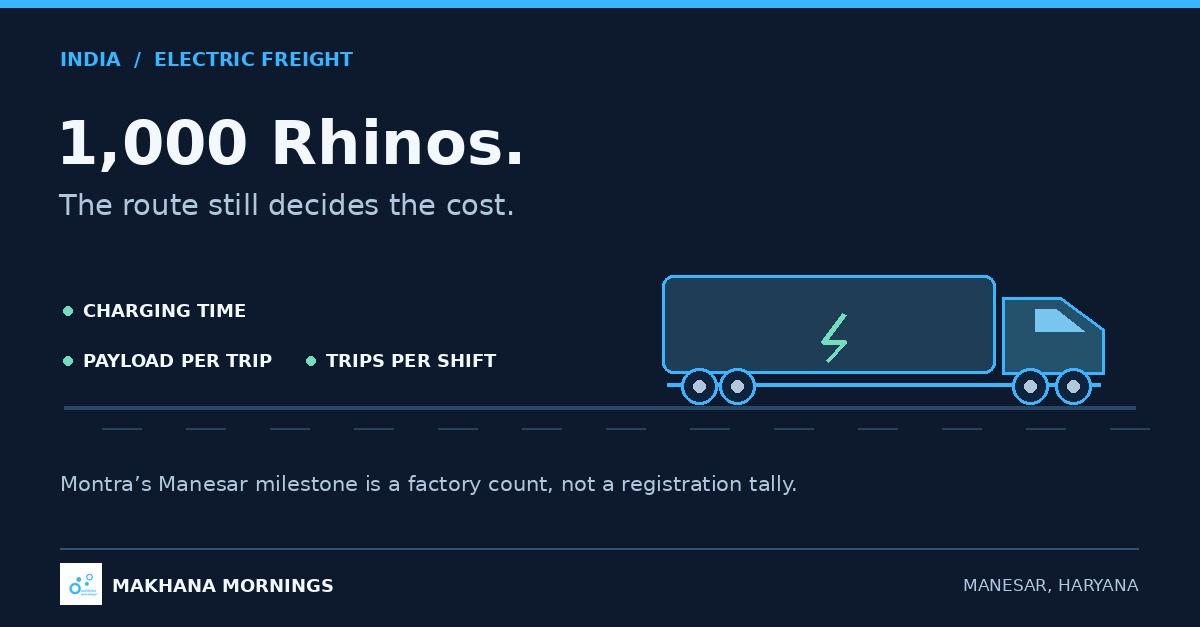
Montra Electric says its 1,000th Rhino heavy-duty electric truck rolled out of its Manesar plant on 20 November. That’s a manufacturing milestone, not a count of registrations. Fleet operators have a different question: how much will it cost to move a tonne of freight on the route they run every day?
Breakdown
On Gujarat’s Pipavav–Sutrapada limestone route, Ampvolts said it deployed 10 Rhino trucks for GHCL in December 2025. The operator had already spent more than a year running a charging hub for logistics providers on that route. This was not a case of buying trucks first and then figuring out where to charge them.
A separate cement trial took an older Rhino 5536 on a 140 km round trip from Sirohi, Rajasthan, to Balaram, Gujarat. The truck averaged three round trips per day in a round-the-clock operation, using a 160 kW charger at JK Lakshmi Cement’s plant. The case study found that fluctuations in available charging current changed how long the truck took to charge. The published charger rating alone didn’t tell the dispatcher when it would be ready for the next load.
Why this matters
A fleet can spend less on energy per kilometre and still pay more per tonne delivered. If the truck carries a smaller payload, it needs more trips to move the same amount. If charging costs it a productive trip, the lease or loan payment still comes due. A fair comparison with diesel includes the charger and power connection, actual charging time, how much the truck carries and how often it can repeat the route.
The big picture
The national PM E-DRIVE scheme can lower the purchase cost of eligible heavy electric trucks. Its truck rules require a scrapping certificate for an internal-combustion truck of equal or greater gross vehicle weight. That can help with the upfront price, but it doesn’t put a charger at the loading point or ensure there will be enough power for several trucks to charge at once.
The Crunch
A thousand trucks from one factory says something about Montra’s ability to build them. The better measure for buyers is the cost per tonne delivered on their own route, using the payload, charging time and number of trips they can actually sustain.
Related categories: Business & Brands
Read next: See how a cement producer is putting electric freight to work in practice: Adani Cement’s rollout at Sanghi.


Leave your thoughts