
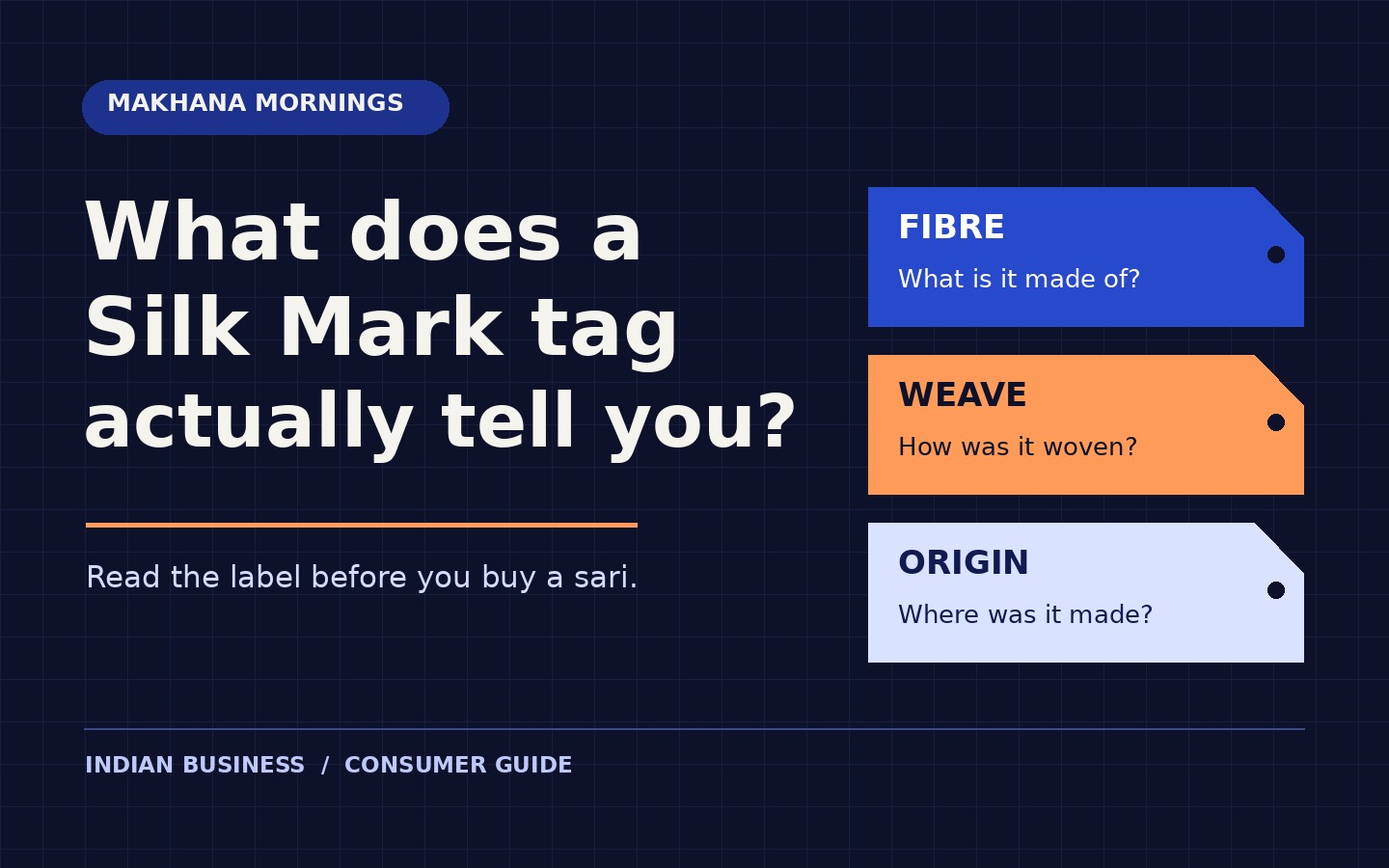
When a shop describes a sari as pure silk, handwoven and from Kancheepuram, it is making three claims. One is about the fibre, one is about the loom, and one is about where the sari comes from. A Silk Mark tag answers the first question. The other two need their own evidence.
The distinction matters during Chennai’s Silk Mark Expo, scheduled for 23 to 27 November at the Hyatt Regency. The Central Silk Board’s exhibition programme puts natural silk in the spotlight. For shoppers, the useful question is what a label lets you check before you pay.
Silk Mark tells you about the fibre
The Silk Mark Organisation of India issues labels to authorised users for products made of pure natural silk. Check the tag attached to the sari you are buying, rather than a sign at the counter. The label’s number helps trace it to the authorised user. That trace is useful if you have a question about who applied the label.
Silk Mark is a fibre assurance. On its own it does not say who wove the sari, whether it was woven by hand or what metal is in the decorative zari thread.
Handloom Mark tells you how it was woven
If handweaving is what you want, look for the separate Handloom Mark and check the code through the scheme’s label verifier. The mark identifies handloom goods. It does not tell you that the yarn is silk. A cotton product can be handwoven, and a natural silk fabric can be woven on a power loom.
Kancheepuram Silk is a registered geographical indication
A geographical indication, or GI, protects the name of a product associated with a defined region and its registered specification. Kancheepuram Silk is registered. If the seller is charging for that origin, ask who made the sari and for evidence connecting the product to an authorised user. A similar weave or appearance does not establish where it was made.
Ask the seller to put the details on the bill
Photograph the label attached to the piece. Ask separately what the sari body is made of, how it was woven, where it was made and what the zari contains. If the price reflects a specific fibre, place of origin or zari composition, ask the seller to describe it on the bill. That gives you a record of the particular sari you paid for, not just the labels displayed in the shop.




Leave your thoughts