
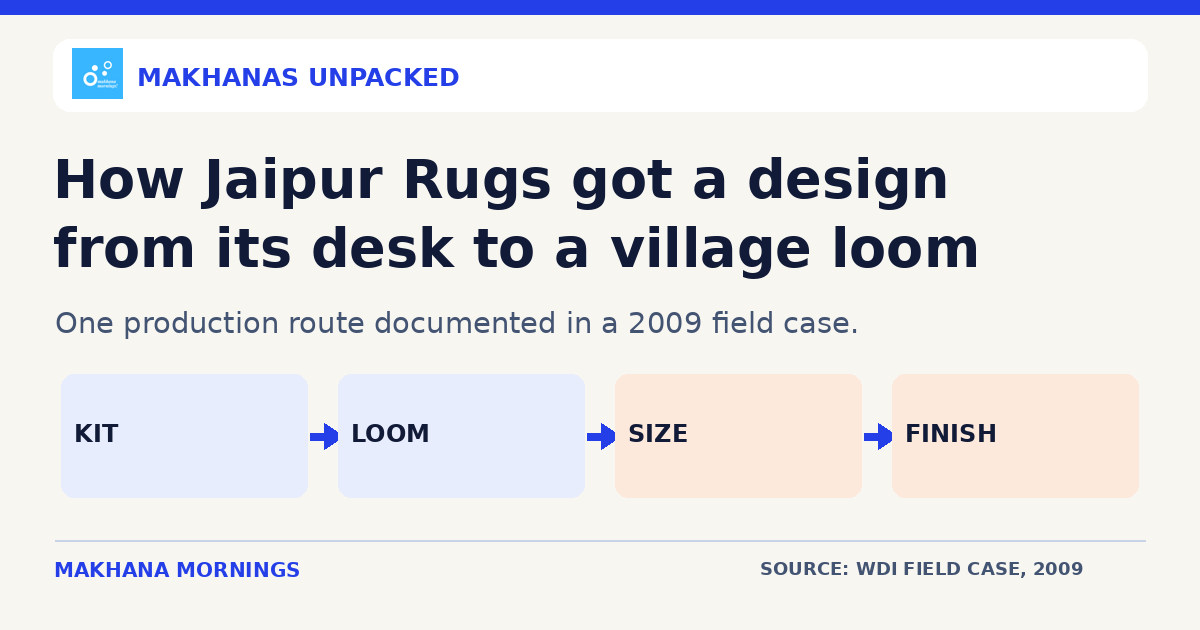
A printed rug map tells a weaver where a colour goes. It cannot show the shade as reliably as the yarn itself. In one production route documented by a 2009 field study, Jaipur Rugs stapled yarn samples to the map. The map travelled to the loom with bundles of dyed yarn and a card listing the materials.

That small detail explains a bigger business decision. Jaipur Rugs could organise work across village looms without putting those looms under one roof. But the work of getting a design made to specification still needed an owner. Someone had to prepare the kit, choose the weaver and check the rug at the right moments.

The map and yarn travelled together
Before the kit left, staff checked the colour of the dyed yarn at headquarters. The stores team packed the map, materials card and yarn in one bag so instructions and materials arrived together. The bag went via a branch office. Local staff were responsible for getting it to the village and collecting the woven rug.

The next available loom was not always the right one
The production team picked an area based on the type of rug and the quality required. Local staff then matched the job to a weaver based on skill, speed and whether a loom was available. The local staff knew how to weave themselves. They could help correct a mistake while the rug was still on the loom, when there was still time to fix it.


Two checks answered two different questions
Inspectors checked the length and width of the woven rug before sending it to a finishing centre. When the rug came back, they checked the washing and repair. Passing the first check only established that the rug met the specifications inspected at that stage. It did not tell them whether the later work had been done properly.


The field study describes this particular route around 2008. It also documents production through intermediaries and outsourced partners, so the route was not universal. Jaipur Rugs’ group still describes weaving and finishing as distinct craft stages; that does not establish that the old routing, roles and inspections all remain in place.

What changes when you buy closer to the maker?
Remove an intermediary and the tasks they performed still need doing. A buyer can take on the design brief, materials, allocation and acceptance checks without owning every workshop. That can be useful when skilled makers are spread out, but the buyer has to plan for the cost and effort of coordinating them.
The Crunch: Before moving any work closer to its maker, ask three questions. What must be in the kit when the job starts? Who can fix a problem while the work is still underway? What will we check before accepting the finished product?

Read next: Why a shared lab matters to Ludhiana’s bicycle reflector makers.



Leave your thoughts