
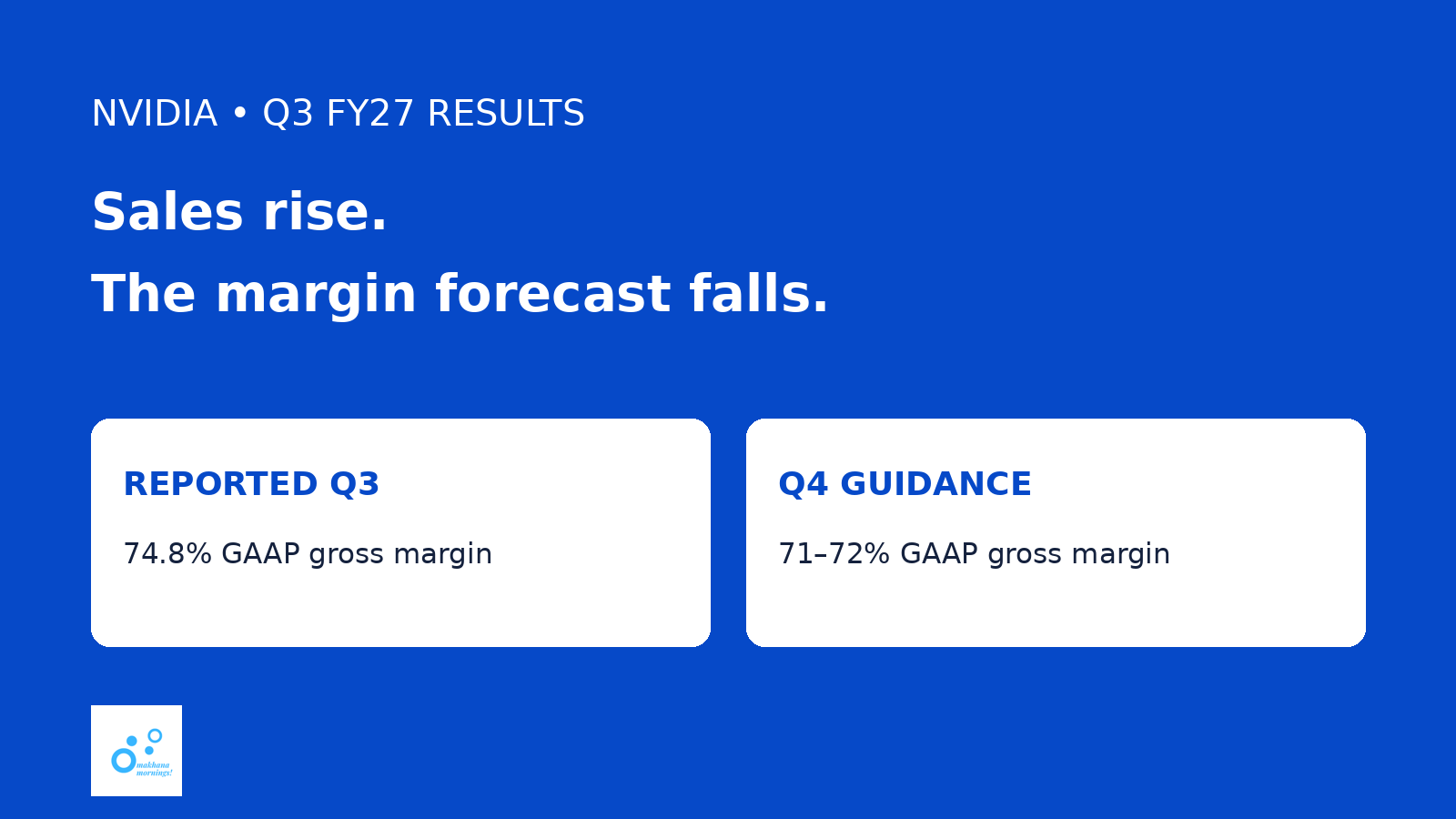
NVIDIA’s latest results put two different questions on the table: how much AI infrastructure it can sell, and how much of each sales dollar remains after the direct cost of delivering it.
In its 17 November earnings release, the company reported revenue of $115.8 billion for the quarter ended 25 October, up 103% from a year earlier. Data Center contributed $107.6 billion. Reported GAAP gross margin was 74.8%.
For the fourth quarter of fiscal 2027, NVIDIA forecasts revenue of $130 billion, plus or minus 3%, and GAAP gross margin of 71–72%. That quarter includes an extra week. The revenue outlook assumes no Data Center compute revenue from China.
Those are company forecasts, not sales already booked as revenue or a margin already achieved.
A bigger business, a different percentage
Gross margin is the share of revenue left after cost of revenue, before operating expenses, interest and tax. A lower percentage does not automatically mean fewer gross-profit dollars: a larger sales base can offset it. Equally, fast revenue growth does not by itself establish that the economics of each additional dollar are improving.
The useful reading is therefore not “growth or slowdown”. It is to track the sales base and the margin together. Comparing successive quarters also requires care when one contains more selling days.
For businesses assessing AI infrastructure spending, the distinction matters beyond one chip supplier. A supplier’s sales demonstrate purchases of infrastructure. They do not, on their own, show whether the customer has earned an adequate return from using it.
The next test is delivery against the forecast. Readers should watch the eventual reported revenue and margin together, rather than treating a guidance midpoint as a finished result or using one quarter’s growth to settle the economics of the entire AI industry.

Leave your thoughts