
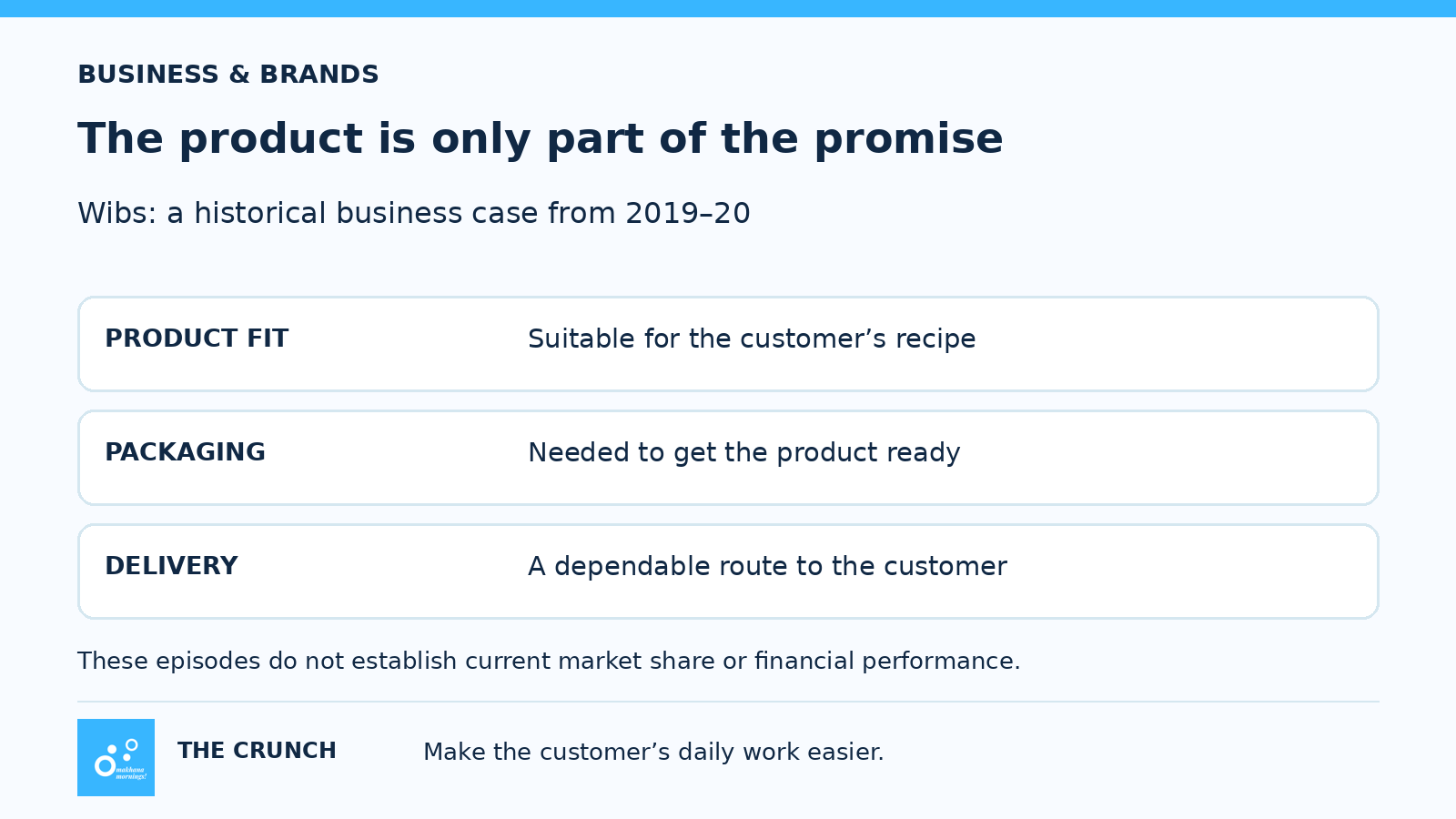
Bread becomes part of a sandwich business long before a customer takes a bite. Its texture has to suit the recipe, and the next delivery has to arrive when the vendor needs it. The useful business lesson in Mumbai’s Wibs story lies in that combination, not in an unverified claim of market dominance.
The Breakdown
A documented episode from September 2019 makes the connection tangible. During a temporary interruption in Wibs supplies, a Mumbai sandwich vendor described searching for substitutes after using the brand for nearly two decades. He valued a texture that worked for both toasted and plain sandwiches. Distributors described the disruption to their delivery network.
These were interviews about a particular moment, not a survey proving that every vendor preferred Wibs. Still, they reveal something a shelf-share statistic cannot: the bread was an input in someone else’s finished product. Replacing it meant adjusting more than the name on the packet.
Why This Matters
Another episode, during the March 2020 lockdown, exposed a different dependency. Wibs’ owner warned that wrapping material arriving from outside Maharashtra could become a bottleneck. Distributors described early difficulties getting delivery workers through movement restrictions.
The factory, packaging supplier and delivery route were all part of the same promise. Producing enough bread would not, by itself, ensure that shops received it.
For a small food business, this is a practical way to think about competition. Product suitability can win a trial. Reliable replenishment can make the supplier easier to keep using. Neither automatically proves loyalty: price, alternatives and service still matter.
The Crunch
Wibs offers a useful historical case in product fit and distribution. It does not justify recycling old estimates as today’s market share, or treating a viral brand story as evidence of current financial success. The stronger question is simpler: does a supplier make its customer’s daily work easier, consistently?
Leave your thoughts